 Save
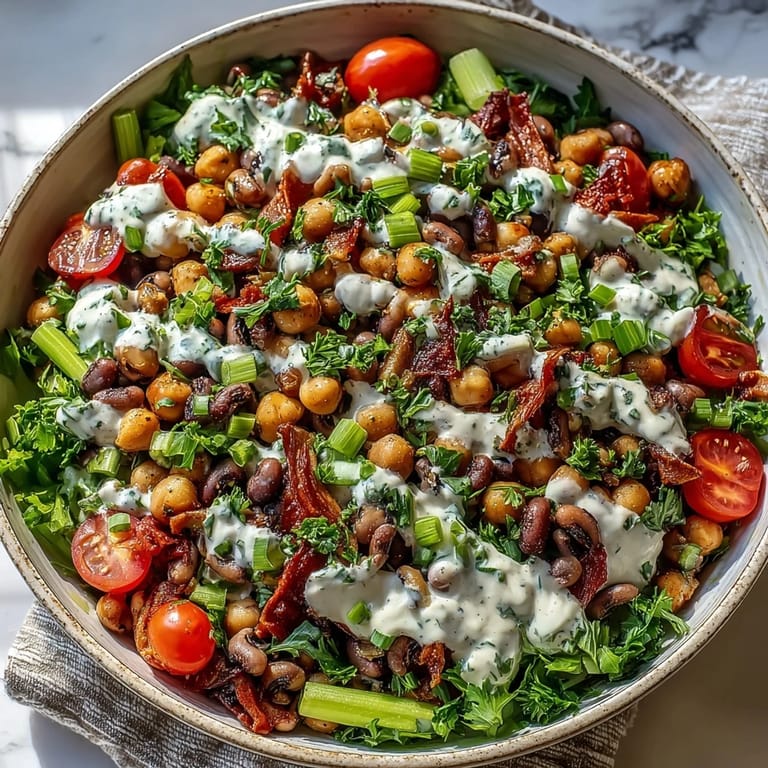
Save My friend texted me on December 31st asking if I knew anything about Hoppin' John—turns out her Southern grandmother swore by it for New Year's luck, but she wanted something lighter, something she could actually eat for lunch without feeling weighed down by tradition. That conversation stuck with me, and by the time midnight hit, I'd sketched out this salad: all the symbolic promise of black-eyed peas and greens, but bright, fresh, and honest enough to feel like something you'd genuinely want on your plate.
I made this for a small New Year's brunch last January, and what surprised me most wasn't the taste but the conversation it sparked—someone asked why black-eyed peas were lucky, and suddenly everyone was sharing their own superstitions and family traditions. A bowl of salad became this beautiful moment of people connecting over hope and small rituals. That's when I knew this recipe was doing something right.
Ingredients
- Black-eyed peas (1 cup dried or 1 can): These are the heart of the dish and the reason it carries luck into the new year—cooking dried ones from scratch tastes richer, but canned will never let you down if you're short on time.
- Chickpeas (1 can, 15 oz): They add another layer of protein and a slightly nutty flavor that balances the earthiness of the black-eyed peas.
- Long-grain rice (1 cup cooked, cooled): Cold rice holds up beautifully in salad without getting mushy, and it adds structure without heaviness.
- Red bell pepper (1 small, diced): This brings sweetness and crunch—choose one that feels heavy for its size, which means it's fresh and juicy.
- Celery stalk (1 small): It's there for texture and a subtle, clean flavor that reminds you this is a real salad, not just beans pretending.
- Red onion (1/2 small, finely chopped): A little goes a long way with red onion, and it adds a sharp note that wakes up your palate.
- Cherry tomatoes (1 cup, halved): They burst when you bite into them, releasing their sweetness—pick ones that smell like tomatoes, not plastic.
- Green onions (2, sliced): These add a fresh, oniony brightness at the very end, so don't skip them or cook them.
- Fresh parsley (1/4 cup, chopped): It's not just garnish here—it genuinely flavors the whole bowl and adds chlorophyll goodness.
- Tahini (1/4 cup): This is your secret weapon for creaminess without cream, and it grounds the dressing with a subtle, toasty flavor.
- Lemon juice (2 tablespoons): Freshly squeezed makes a noticeable difference—bottled lemon juice tastes thin in comparison.
- Apple cider vinegar (1 tablespoon): It adds complexity and a gentle tang that lets all the other flavors shine.
- Olive oil (1 tablespoon): Just enough to emulsify the dressing and carry the flavors.
- Maple syrup or agave (1 teaspoon): A tiny touch of sweetness balances the acid and brings harmony to the dressing.
- Garlic (1 clove, minced): Raw garlic is spicy and assertive, so mince it fine and don't be shy about tasting as you go.
- Salt, black pepper, smoked paprika: These are the finishing touches that say, 'Someone who knows what they're doing made this.'
Tired of Takeout? 🥡
Get 10 meals you can make faster than delivery arrives. Seriously.
One email. No spam. Unsubscribe anytime.
Instructions
- Prepare your peas:
- If using dried black-eyed peas, rinse them under cold water and soak overnight or for at least 4 hours—this softens them and makes them cook faster and more evenly. Drain, cover with fresh water, and simmer for 30–40 minutes until they're tender but not mushy. If using canned, just drain and rinse to remove that metallic flavor.
- Build the base:
- In a large bowl, combine your cooled cooked peas, chickpeas, rice, bell pepper, celery, red onion, cherry tomatoes, green onions, and parsley. Everything should be chopped small enough to feel like one cohesive salad, not a collection of separate ingredients.
- Whisk the dressing:
- In a small bowl, combine tahini, lemon juice, apple cider vinegar, olive oil, maple syrup, minced garlic, salt, pepper, and smoked paprika if you want it. Start whisking and gradually add water one tablespoon at a time until the dressing loosens into something creamy and pourable—it should coat a spoon but still flow.
- Bring it together:
- Pour the dressing over the salad and fold it in gently with a rubber spatula, turning everything to coat evenly. Taste a forkful and adjust the seasoning—maybe it needs more salt, a splash more lemon, or a pinch of paprika.
- Rest and serve:
- You can eat it right away, but letting it sit in the fridge for an hour allows the flavors to get to know each other. Give it a gentle toss before serving, since the peas and rice will have absorbed some of the dressing.
 Save
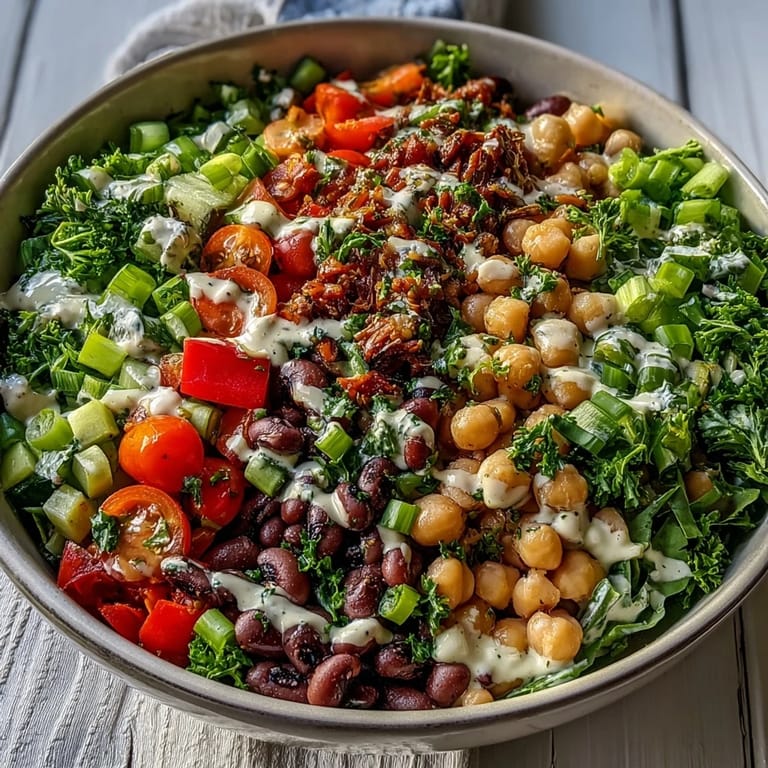
Save There's something deeply satisfying about eating something intentional on January 1st—not out of punishment or restriction, but because you chose to start the year with real food that tastes alive. This salad feels like that kind of choice.
Why This Salad Works as a New Year Ritual
Black-eyed peas have been served on New Year's Day in the South for generations, paired with collard greens (for money) and cornbread (for gold) to symbolize prosperity and luck. This salad honors that tradition without pretending to be something it's not—it's modern, plant-forward, and honest. You're eating for abundance, not superstition, though if abundance comes, you won't complain about that either.
Make-Ahead and Storage
This salad actually improves after a few hours in the fridge as the flavors deepen and the tahini dressing seeps into every crevice. You can assemble it the night before, cover it, and pull it out for lunch without any real degradation. Leftovers keep for up to three days, though the tomatoes will soften and the greens will wilt slightly—still delicious, just different.
Variations and Add-Ons
The beauty of this salad is that it's a framework, not a rulebook. I've made it with diced avocado folded in at the last second for richness, with shredded kale mixed in for extra greens and earthiness, and with jalapeños sliced thin for people who like their food to wake them up. Some afternoons I add a pinch of cayenne to the dressing for heat, and other times I drizzle pomegranate molasses instead of apple cider vinegar for something deeper and more complex.
- Avocado, diced and folded in just before serving, adds creaminess that balances the tahini beautifully.
- Jalapeños or a pinch of cayenne in the dressing bring heat without overwhelming the other flavors.
- A handful of chopped kale mixed in adds nutrition and a slight bitterness that grounds the sweetness of the tomatoes.
 Save
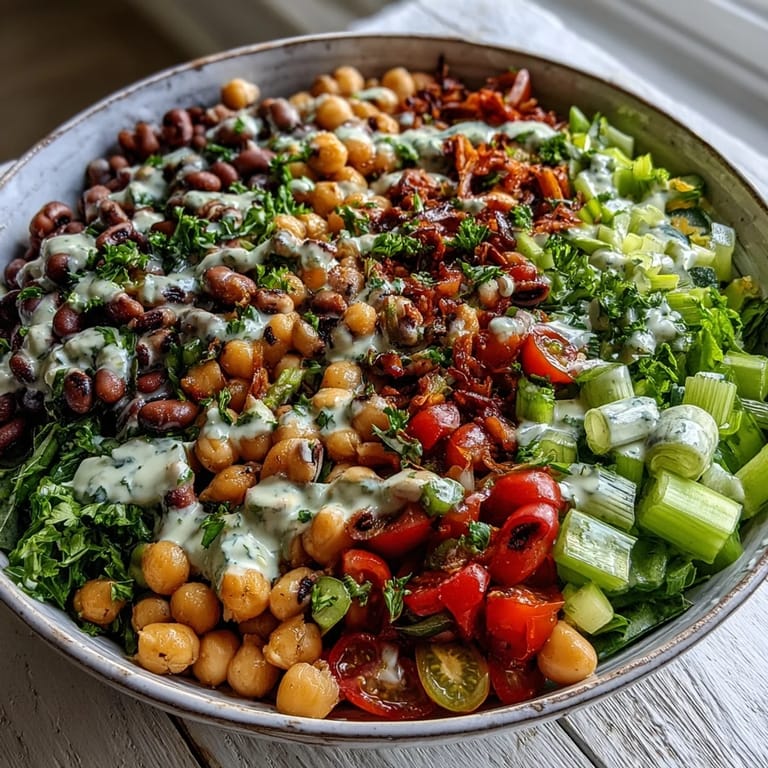
Save Start your year with something that tastes as good as it makes you feel, and let a bowl of salad remind you that luck and good food are things you can actually make yourself. Happy new year.
Recipe FAQs
- → Why is Hoppin John traditionally eaten on New Year's Day?
Black-eyed peas symbolize coins and prosperity in Southern folklore, while the rice represents abundance. Eating Hoppin John on New Year's Day is believed to bring good luck and financial fortune for the coming year.
- → Can I make this salad ahead of time?
Absolutely. This salad actually improves after resting in the refrigerator for an hour or two. The flavors meld beautifully, and leftovers stay fresh for up to 3 days when stored in an airtight container.
- → What can I substitute for tahini?
Creamy peanut butter or sunflower seed butter work well as alternatives. Cashew butter also provides a similar rich texture. Just keep in mind the flavor profile will shift slightly with each substitution.
- → Is this salad gluten-free?
Yes, as written this salad is naturally gluten-free. Just ensure your tahini and any canned ingredients are certified gluten-free if you have severe sensitivities, as cross-contamination can occur during processing.
- → How do I prevent the tahini dressing from separating?
Whisk the dressing vigorously while adding water one tablespoon at a time. The emulsion forms best when all ingredients are at room temperature. If separation occurs, simply whisk again before serving.
- → Can I use fresh black-eyed peas instead of dried or canned?
Fresh black-eyed peas work wonderfully and cook even faster than dried—about 20-25 minutes simmering time until tender. They're worth seeking out at farmers markets during late summer and fall.