 Save
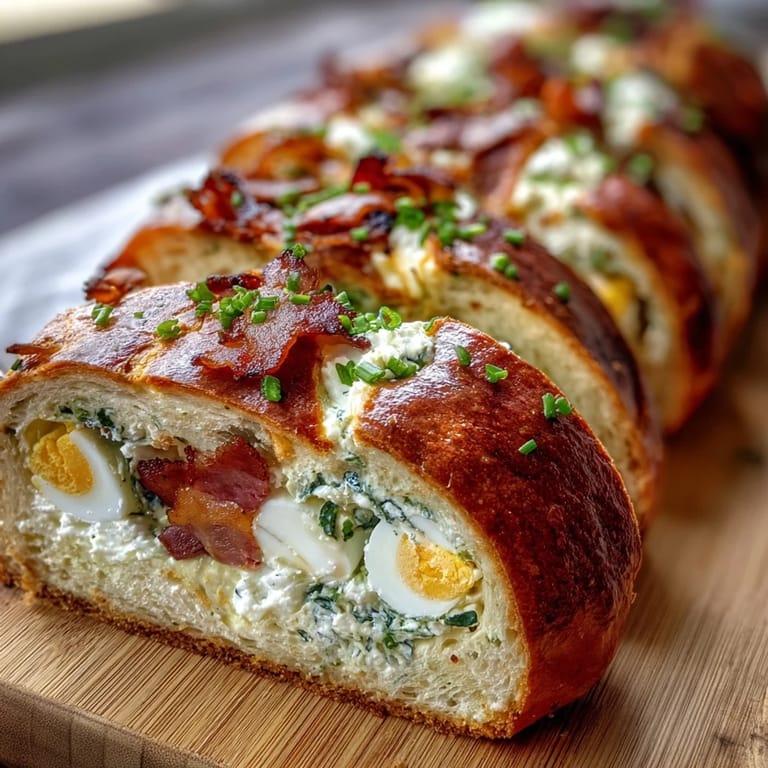
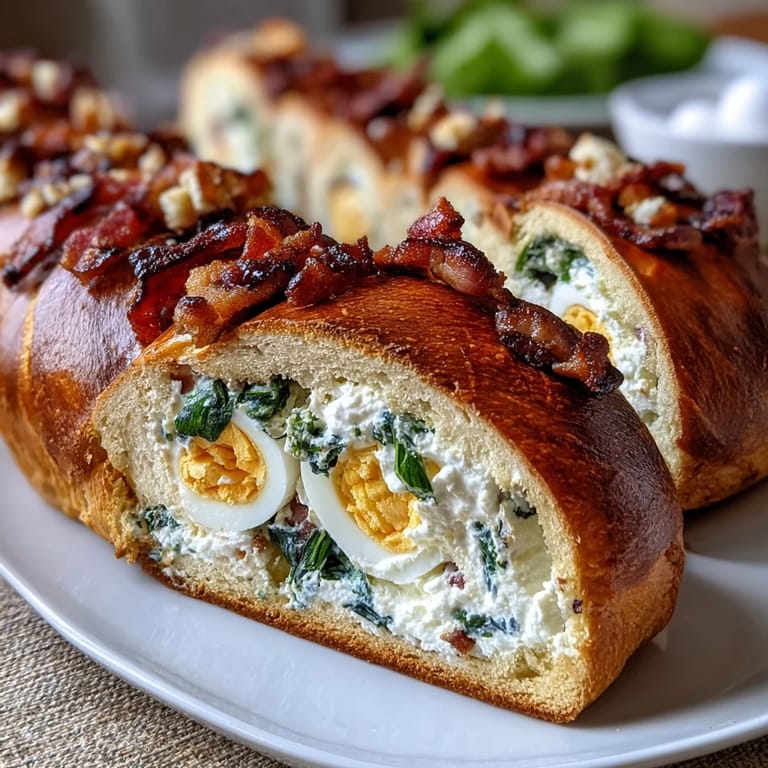
Save My sister called me three days before Easter asking if I could bring something "impressive" to the family gathering, and I found myself staring at a block of ricotta at the market, suddenly remembering my grandmother's kitchen in Italy where savory pies meant celebration. That afternoon, while arranging hard-boiled eggs in a spiral pattern, I realized this dish wasn't just about feeding people—it was about creating that moment when everyone cuts into the first slice and gasps at the perfectly halved eggs nestled inside the creamy filling. There's something theatrical about a pie that reveals its secrets only when you cut it, and this one does exactly that.
I made this for the first time on a quiet Tuesday evening, testing it before the actual holiday, and my teenager wandered into the kitchen halfway through assembly drawn by the smell of toasted pastry and nutmeg. He watched me carefully position those eggs in their little nests of filling, asking why I was being so careful about it, and when I explained it was for the visual surprise, he nodded seriously and appointed himself the official "reveal taster" for the baked version. That pie became the thing he actually looked forward to eating at Easter dinner.
Ingredients
- Puff pastry (2 sheets, about 500 g): Keep these frozen until you're ready to use them—the cold butter in the dough is what gives you those gorgeous flaky, golden layers when it bakes, so don't rush the thawing process.
- Ricotta cheese (250 g): This is your filling's foundation, creamy and mild enough to let the ham and Parmesan shine; make sure it's at room temperature so it blends smoothly with the other ingredients.
- Cooked ham (150 g, diced): Buy it from the deli counter if you can and ask them to slice it thick, then dice it yourself—the texture matters more than you'd think for that satisfying bite.
- Baby spinach (100 g, wilted and chopped): Wilt it gently in a dry pan and squeeze out every bit of excess moisture, or your pie will weep liquid during baking and the filling will separate from the pastry.
- Parmesan cheese (80 g, grated): Grate it fresh if possible; the flavor is sharper and the texture lighter than pre-grated versions that have anti-caking agents.
- Large eggs (3 for filling): These bind the ricotta mixture and add richness without making it grainy, so use them at room temperature for even mixing.
- Ground nutmeg (1/2 tsp): This is the quiet spice that makes people ask "what is that flavor?"—don't skip it and don't measure it generously or it will overpower the savory elements.
- Black pepper and salt (1/2 tsp each): Taste the filling before you bake and adjust seasoning; the Parmesan adds saltiness, so go gentle at first.
- Olive oil (1 tbsp): This helps the filling stay moist and keeps the pastry from drying out during the long bake.
- Hard-boiled eggs (4 large, peeled): Boil these the day before and keep them in the fridge so they're easy to handle and position perfectly in the center of your pie.
- Egg wash (1 yolk mixed with 1 tbsp milk): This creates that professional golden-brown shine; brush it on just before baking, not earlier, or it will dry out and look dull.
Tired of Takeout? 🥡
Get 10 meals you can make faster than delivery arrives. Seriously.
One email. No spam. Unsubscribe anytime.
Instructions
- Prepare your workspace and oven:
- Set your oven to 190°C (375°F) and generously grease your 23 cm springform or pie pan with butter, making sure to get into all the corners and edges so the pastry doesn't stick. This is also the moment to pull your puff pastry sheets from the fridge if they're still frozen, giving them about fifteen minutes to soften slightly.
- Line the pan with pastry:
- Lay the first puff pastry sheet into your greased pan, gently pressing it into the bottom and up the sides without stretching it too much, and let it hang over the edge a bit—this overhang will seal with the top crust. The pastry should cover the entire bottom and come up the sides like a protective lining.
- Build the filling base:
- In a large bowl, combine the ricotta, diced ham, chopped spinach, grated Parmesan, the three eggs, nutmeg, pepper, salt, and olive oil, stirring with a spoon until the mixture is smooth and evenly combined with no streaks of ricotta remaining. The filling should look creamy but substantial, not airy.
- Layer the first filling:
- Spread exactly half of the ricotta mixture in an even layer across the pastry-lined pan, using the back of your spoon to smooth it gently so it reaches the edges but doesn't press down too firmly. You want a level surface because you'll be nestling eggs into this layer next.
- Position the surprise eggs:
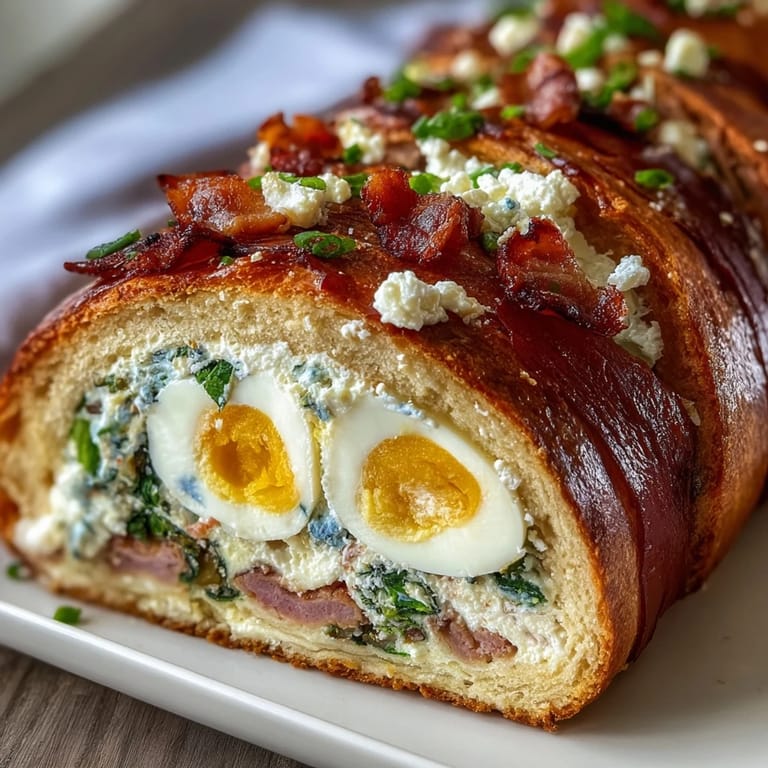
- Create four shallow grooves in the filling with the back of a spoon, spacing them evenly in a line across the pie, then gently place the hard-boiled eggs into these grooves so they sit horizontally and are partially buried. Step back and look at your arrangement—this is the moment that will make people gasp when they slice into the pie later.
- Cover with remaining filling:
- Spoon the remaining ricotta mixture over and around the eggs, smoothing it carefully so the eggs are completely encased and the top surface is level and even. You want the filling to hold the eggs in place during baking without shifting around.
- Seal with the top crust:
- Place the second puff pastry sheet over the filling, gently pressing it onto the surface and down the sides, then trim away excess pastry with a sharp knife and press the edges together where they meet the bottom crust, crimping decoratively with a fork if you like the extra touch. The seal is important because it traps the steam and helps the pastry puff up evenly.
- Apply the golden finish:
- Whisk together the egg yolk and milk in a small bowl until combined, then use a pastry brush to paint this mixture across the entire top surface of the pie, covering every visible bit of pastry for an even golden color. Work quickly so the egg wash doesn't start to dry.
- Vent for steam:
- Using the tip of a sharp knife, cut three or four small slits in the top pastry, spacing them evenly so steam can escape gradually and the filling stays creamy rather than becoming watery. Make these slits small—about an inch long—so they don't look sloppy.
- Bake to golden perfection:
- Place the pie in your preheated oven and bake for 40 to 45 minutes, until the pastry is puffed and deeply golden brown and you can see the filling peeking slightly through the steam vents. The kitchen will smell extraordinary—warm butter, nutmeg, and ham all mingling together.
- Cool before slicing:
- Remove the pie from the oven and let it rest at room temperature for at least 20 minutes before attempting to slice, as this time allows the filling to set slightly and the eggs to hold their round shape when you cut through them. A warm pie will be delicious but will fall apart; a cooled one will slice like a dream.
 Save
Save My favorite moment with this pie happened when my daughter brought it to a potluck at her office, and she texted me a photo of it on the serving table with the caption "people keep asking who made this." She said coworkers were actually taking pictures of their slices, and for a minute I felt like that simple combination of ricotta and ham had somehow become special just by being arranged thoughtfully. That's when I understood that cooking isn't really about following steps—it's about creating something people want to talk about.
Why This Pie Works for Spring Celebrations
There's something about hard-boiled eggs that reads as springtime and renewal, and pairing them with fresh spinach and the richness of ricotta feels both elegant and comforting at the same time. This pie sits beautifully at room temperature for hours, which means you can bake it in the morning and serve it for lunch or dinner without reheating, making it ideal for those holiday gatherings where oven space is precious and timing is everything. The flaky pastry crust gives you that satisfying textural contrast against the creamy filling, and the ham provides just enough savory punch to keep it from tasting one-note or heavy.
The Art of the Reveal
What makes this pie different from other savory pastries is that moment when you cut into it and those perfectly halved eggs appear like little gifts hidden inside—it's a small detail that transforms an ordinary pie into something memorable and special. The eggs don't add complexity to the flavor, but they add theater, and honestly, food that brings a smile to someone's face before they even taste it is already winning. I've learned that the most impressive dishes aren't always the ones with the longest ingredient lists; sometimes it's the ones with the best surprise.
Storage and Serving Flexibility
One of the reasons I come back to this recipe constantly is its flexibility—it tastes equally wonderful straight from the oven when the pastry is still crisp and warm, or at room temperature after a few hours when the flavors have melded together slightly. You can make it the morning of an event and simply cover it loosely with foil until serving time, and it travels well to potlucks or picnics because it doesn't require any special heating or garnishing at the last minute. Leftover slices keep beautifully in the refrigerator for a couple of days, and they're honestly better the next day when the filling has fully set and the flavors have deepened.
- Slice with a sharp, warm knife dipped in hot water between cuts for clean edges that show off those beautiful eggs.
- A simple green salad dressed with lemon vinaigrette is the perfect companion to balance the richness of the pie.
- If you're making this ahead, store it in an airtight container and let it come to room temperature for about 15 minutes before serving for the best flavor and texture.
 Save
Save This pie is the kind of recipe that feels special to make but isn't pretentious about it—it's forgiving enough for a midweek dinner and elegant enough to take to the most important celebration. Make it once and it'll become a keeper.
Recipe FAQs
- → What type of pastry is best for this pie?
Puff pastry works best, offering a flaky and golden crust that complements the creamy filling.
- → Can I substitute the spinach with other greens?
Yes, Swiss chard or kale are excellent alternatives that provide similar texture and nutrition.
- → How should the hard-boiled eggs be prepared?
Eggs should be boiled until hard, peeled, and placed horizontally inside the filling to create a decorative cross-section.
- → Is it possible to add herbs to the filling?
Fresh herbs like parsley or basil can be incorporated to enhance flavor without overpowering the main ingredients.
- → What is the recommended serving method?
Serve this pie warm or at room temperature alongside a simple green salad for a balanced meal.