 Save
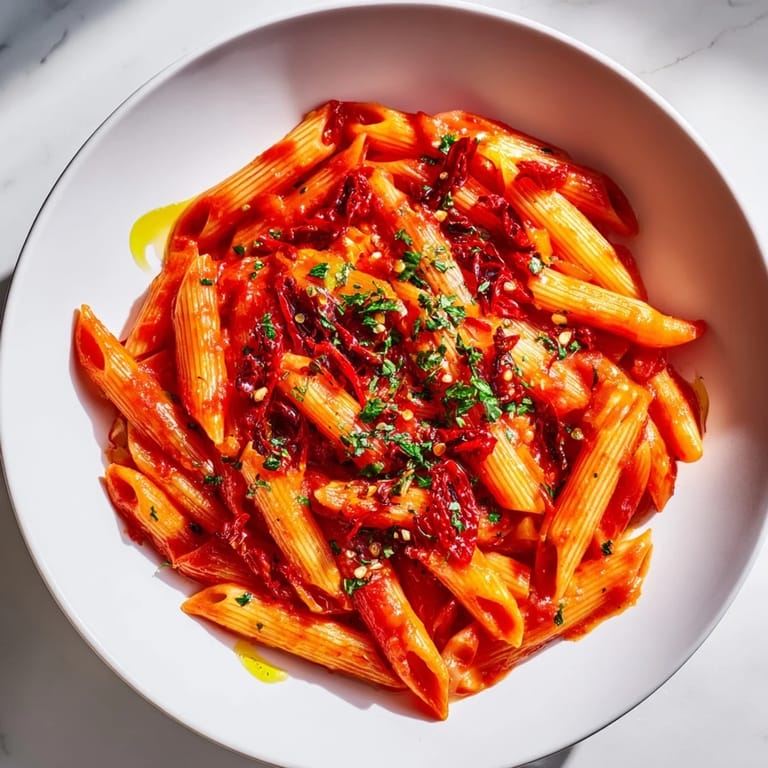
Save I stumbled onto the magic of Penne all'Arrabbiata during a late-night craving in my tiny kitchen, armed with nothing but pasta, canned tomatoes, and a handful of garlic. There's something about the simplicity that stopped me cold—just three core ingredients creating something so alive and complex that I wondered how I'd survived without it. That first bite, the way the heat crept up on me followed by a shower of fresh parsley, felt like discovering a secret the Romans had been keeping to themselves. Since then, it's been my go-to when I want bold flavor without fuss, and honestly, when I want to impress people with minimal effort.
I made this for my neighbor once when she mentioned craving something spicy, and she showed up at my door asking what sorcery allowed three humble ingredients to taste like pure comfort. We ate standing up in my kitchen at 8 p.m. on a Tuesday, talking about nothing in particular while the red sauce painted our fingers, and somehow that felt more special than any elaborate dinner party ever could. That's when I realized this dish doesn't need ceremony—it just needs to be made with attention and served with genuine warmth.
Ingredients
- Penne Rigate: The ridges catch and hold the sauce, so don't swap for smooth pasta unless you want the sauce sliding off onto your plate.
- Extra Virgin Olive Oil: This is where half your flavor lives, so reach for something you'd actually taste on its own—the cheap stuff will betray you here.
- Garlic Cloves: Slice them thin and watch them like a hawk once they hit the oil, because the line between fragrant and burnt is about forty-five seconds.
- Red Chili Flakes: Start with one teaspoon if you're new to heat, but understand that these flakes are patient and build their warmth slowly through the dish.
- Peeled Whole Tomatoes: Canned is absolutely fine and often better than fresh when you're outside tomato season—just make sure you crush them by hand so you feel like you're part of the process.
- Sea Salt and Black Pepper: These aren't afterthoughts here; they're structural, bringing out the tomato's natural sweetness and making the heat sing.
- Fresh Flat-Leaf Parsley: Chop it just before serving, because pre-chopped tastes like disappointment and the fresh version lights the whole dish up.
Tired of Takeout? 🥡
Get 10 meals you can make faster than delivery arrives. Seriously.
One email. No spam. Unsubscribe anytime.
Instructions
- Get Your Water Ready:
- Fill a large pot with water, add a generous handful of salt so it tastes like the sea, and bring it to a rolling boil. The salt seasons the pasta from inside out, and this is non-negotiable.
- Cook the Penne:
- Add your pasta and stir occasionally for the first two minutes to prevent sticking. Check for doneness a minute or two before the package says it's done—you want it tender but with a whisper of resistance when you bite it. Before draining, steal about half a cup of that starchy water and set it aside like a secret weapon.
- Start Your Sauce:
- While pasta cooks, warm your olive oil in a large skillet over medium heat until it shimmers slightly. Add your sliced garlic and chili flakes together, and listen for the gentle sizzle—this should smell immediately inviting, nutty, alive. Let it go for about a minute until the kitchen smells incredible but the garlic hasn't started turning brown at the edges.
- Build the Sauce:
- Pour in your crushed tomatoes along with salt and pepper, and give everything a gentle stir. Let this bubble quietly and uncovered for about twelve to fifteen minutes, stirring every couple of minutes, until the sauce loses its raw taste and thickens ever so slightly. You'll notice the color deepens and the smell becomes almost sweet—that's when you know it's ready.
- Marry the Pasta and Sauce:
- Add your drained penne directly to the sauce and toss constantly for a minute, letting every strand coat itself in red goodness. If it looks too thick or clingy, splash in some of that reserved pasta water a little at a time, stirring as you go, until the sauce clings to the pasta like it belongs there.
- Finish with Heart:
- Take the skillet off the heat, scatter your freshly chopped parsley over everything, and drizzle with a small splash of really good olive oil. Taste a bite and adjust salt or heat if your palate demands it, then serve immediately while the warmth is still climbing.
 Save
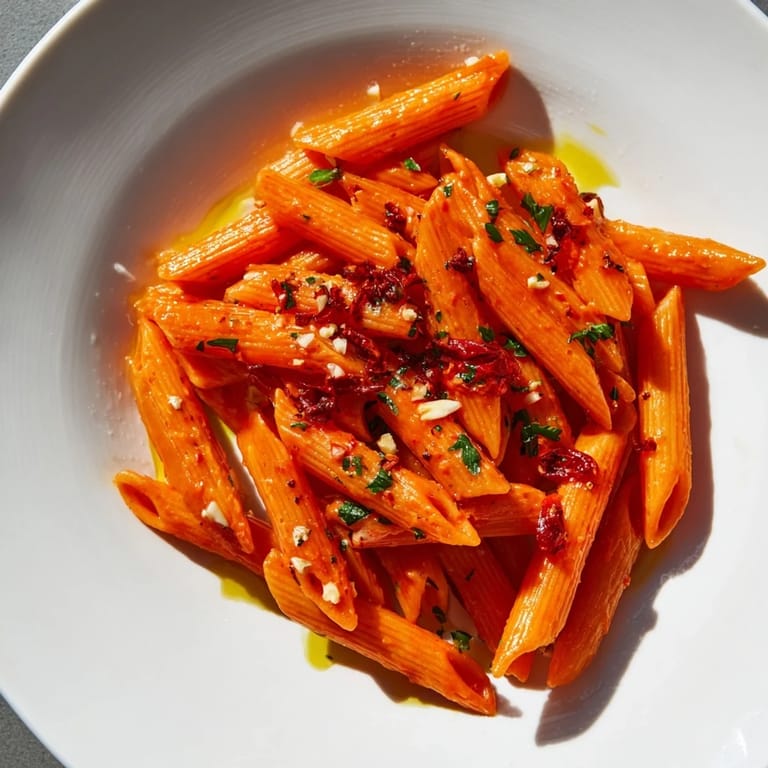
Save I once made this for a friend who'd been stuck in a food rut, eating the same three things on rotation for months, and watching her face light up when that first bite of heat and brightness hit her tongue reminded me why I cook at all. It wasn't fancy, it wasn't complicated, but it was a quiet way of saying I see you and I want you to feel something good. That's the real magic of Arrabbiata—it's not about impressing, it's about showing up with intention.
The Soul of Roman Simplicity
This dish emerged from the kitchens of working Romans who had minimal resources but maximum flavor ambition, and that spirit is embedded in every element. There's a lesson in restraint here that feels almost rebellious in a world of food trends and endless ingredient lists. When you cook Arrabbiata, you're not following a trend—you're honoring something that's been quietly perfect for centuries, and that kind of confidence tastes different.
Heat and Balance
The chili flakes in this sauce aren't there to punish your mouth—they're there to amplify and awaken everything else happening in the bowl. Start conservative if you're unsure about your heat tolerance, because you can always add more at the table, but you can't take it back once it's in the pot. The key is understanding that heat should enhance flavor, not mask it, and in Arrabbiata the tomato and garlic should still be the main voices with the chili adding depth and a warm lingering sensation.
Serving and Pairing
Serve this immediately in warm bowls while everything is still hot and the parsley still bright green, because every minute it sits is a minute the magic softens. This dish asks for simplicity in what comes alongside it—good crusty bread for soaking up sauce, nothing more complicated than that. The traditional pairing is a crisp white wine like Verdicchio that cuts through the richness, or a light red like Chianti if you prefer something earthier.
- Pour a little extra olive oil over the top just before eating to add richness and protect the parsley from wilting.
- Leftovers reheat beautifully with a splash of water, though honestly this rarely has leftovers in my house.
- Make a double batch if you're feeding more people—it scales effortlessly and tastes even better the next day.
 Save
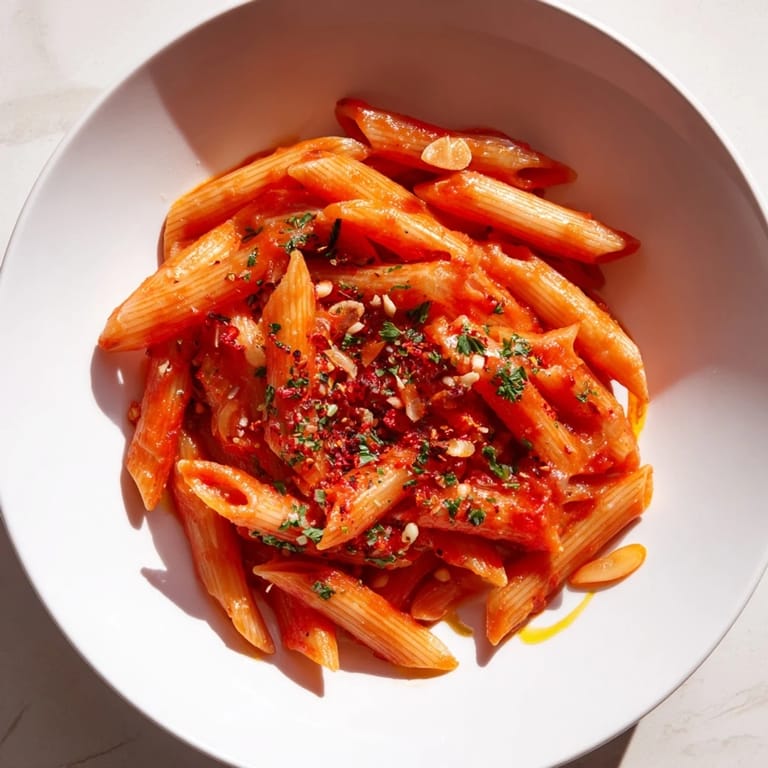
Save This recipe is proof that the best food doesn't come from complication—it comes from knowing what matters and honoring those few things completely. Make this when you want to remember why you love cooking in the first place.
Recipe FAQs
- → How do I balance the spiciness in this dish?
Adjust the amount of red chili flakes according to your heat preference. For milder flavors, reduce the flakes or remove the seeds to lessen the kick without compromising taste.
- → What type of pasta works best with this sauce?
Penne rigate is ideal as its ridges help hold the chunky tomato sauce, ensuring every bite is flavorful and coated.
- → Can I prepare the sauce ahead of time?
Yes, the tomato sauce can be made in advance and gently reheated before tossing with the cooked pasta to enhance melding of flavors.
- → How should I save pasta water for the sauce?
Reserve about half a cup of pasta water before draining. The starchy water helps loosen and bind the sauce, creating a glossy finish.
- → What garnishes complement this dish?
Freshly chopped flat-leaf parsley brightens the dish, while a drizzle of extra virgin olive oil enhances richness and aroma.