 Save
Save One Wednesday afternoon, my friend showed up at my door with a bag of farmers market vegetables and said, "Let's make something that actually tastes like lunch, not punishment." We ended up creating this bowl by accident, really—roasting whatever looked good, cooking quinoa on autopilot, and whisking together tahini sauce while standing in the kitchen light. That simple moment taught me that the best meals often come from curiosity rather than planning.
I made this for a potluck where everyone brought heavy casseroles, and somehow this bright, colorful bowl became the thing people kept going back to. Someone's grandmother even asked if it was "real food," and when she tasted it, she smiled in that quiet way that means you've done something right.
Ingredients
- Red bell pepper: Choose one that feels heavy for its size; those tend to be juicier and sweeter when roasted.
- Zucchini: Slice it thicker than you think you should so it doesn't turn into mush in the oven.
- Red onion: The color bleeds into everything, which is beautiful, but cut it into wedges so pieces don't scatter.
- Cherry tomatoes: Halve them so they caramelize at the edges instead of staying watery.
- Carrot: Slice on a bias to make it look intentional and help it cook faster.
- Olive oil: Don't skip this—it's what makes the vegetables actually taste roasted, not steamed.
- Dried oregano and smoked paprika: These two are a quiet power couple that make everything taste like you know what you're doing.
- Quinoa: Rinsing it is non-negotiable; otherwise it tastes vaguely soapy and nobody will be happy.
- Water: Use filtered if you have it; it makes a small but real difference in how clean the quinoa tastes.
- Tahini: Buy the kind that's just ground sesame seeds, not the stuff with added oils unless you like a greasier sauce.
- Lemon juice: Fresh is absolutely worth the two minutes it takes to squeeze; bottled tastes like regret.
- Maple syrup or honey: This cuts through the earthiness of tahini so the sauce doesn't feel heavy.
- Garlic: One clove is enough; too much and it overpowers the delicate sauce.
- Pumpkin seeds: Toast them yourself if you can; the smell alone is worth it, and they stay crunchier.
Tired of Takeout? 🥡
Get 10 meals you can make faster than delivery arrives. Seriously.
One email. No spam. Unsubscribe anytime.
Instructions
- Heat your oven and prep your space:
- Get the oven to 425°F and line a baking sheet with parchment paper while it warms. This takes two minutes and saves you from scrubbing later.
- Build your vegetable situation:
- Toss all your cut vegetables with olive oil and spices right on the baking sheet—one less bowl to wash and you can see exactly how much coating everything gets. Spread them in a single layer so they actually roast instead of steaming each other.
- Let the oven do its job:
- Roast for 25 to 30 minutes, stirring halfway through so nothing gets lonely in the corner. You'll know it's ready when the edges are dark and crispy and the kitchen smells like a Mediterranean restaurant.
- Cook quinoa while vegetables roast:
- Combine rinsed quinoa, water, and a pinch of salt in a saucepan, bring to a boil, then lower the heat and cover. Let it simmer for 15 minutes, then turn off the heat and let it sit covered for 5 minutes before fluffing with a fork—this resting time is what makes it fluffy instead of mushy.
- Whisk together your sauce:
- In a small bowl, combine tahini, lemon juice, maple syrup, minced garlic, and salt, then slowly add water while whisking until it reaches a consistency that drizzles easily. It should look creamy and pourable, not thick like peanut butter.
- Assemble with intention:
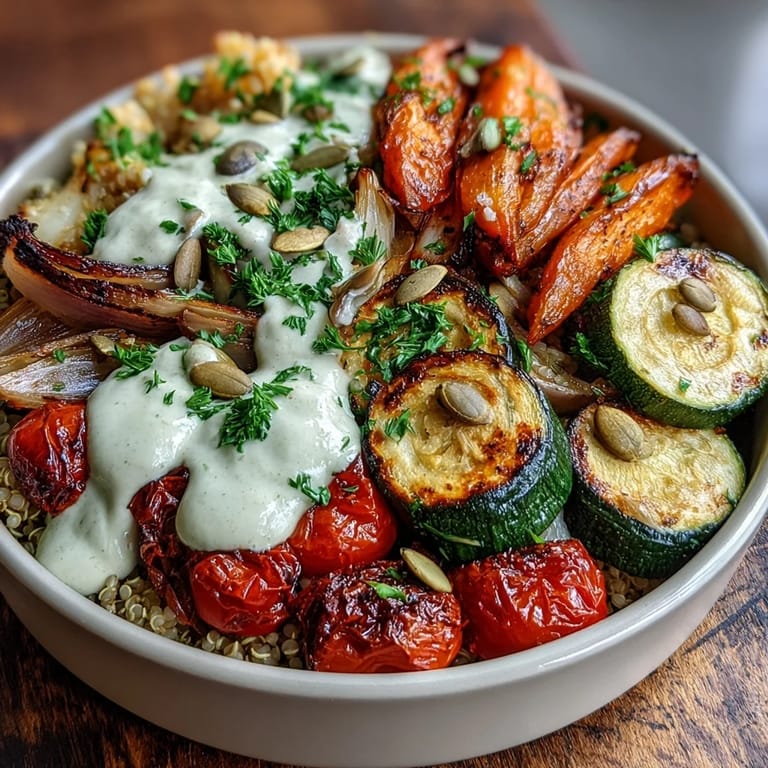
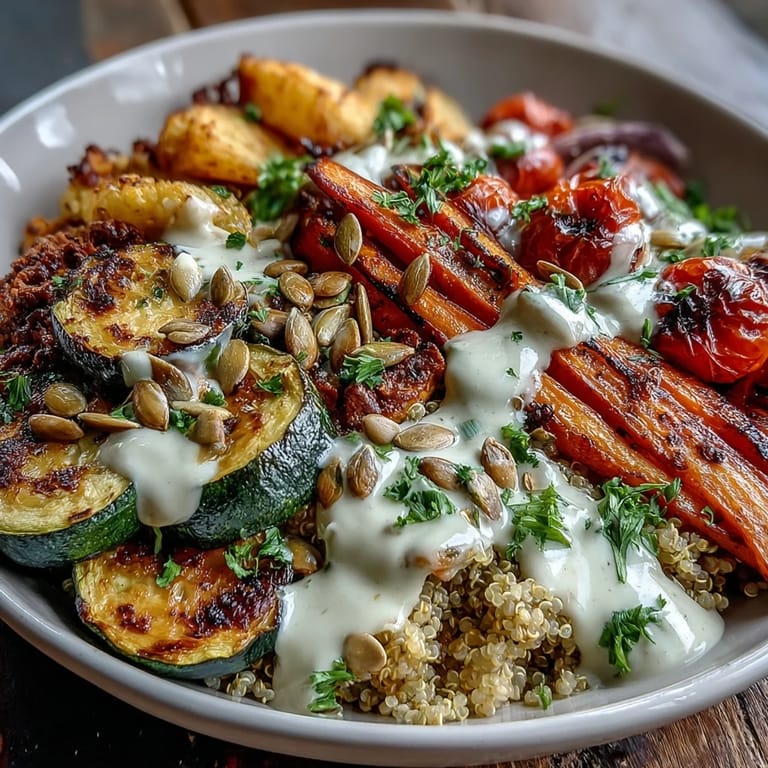
- Divide quinoa among four bowls, arrange roasted vegetables on top, drizzle tahini sauce generously, and finish with parsley and pumpkin seeds if you want it to look as good as it tastes.
 Save
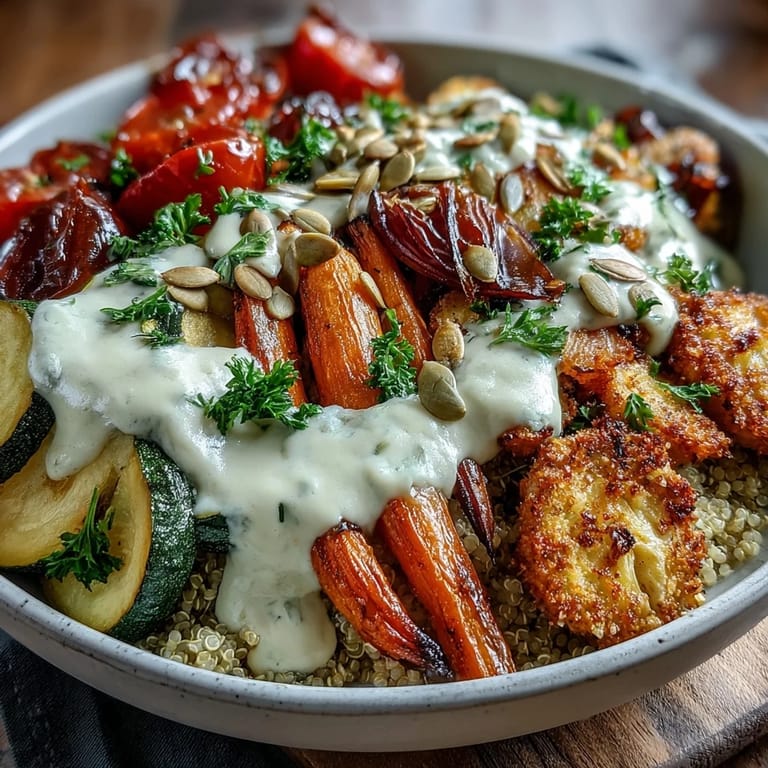
Save My sister brought this bowl to a lunch where she was nervous about being the vegan option, and it turned into the thing everyone wanted to recreate at home. That's when I realized this wasn't just a recipe—it was permission to nourish yourself with colors and flavors that actually make you feel alive.
Why These Vegetables Work Together
Each vegetable brings something different to the party: bell peppers get sweet and slightly charred, zucchini becomes tender and mild, red onion turns jammy and a little sharp, carrots stay firm with a subtle sweetness, and tomatoes shrivel into concentrated flavor bombs. Together they create a texture and taste situation that keeps you interested with every bite instead of feeling like you're eating health food out of obligation. The roasting method is key because it concentrates flavors in a way that steaming or raw never could.
The Tahini Sauce Secret
This sauce is what separates a good bowl from one that makes you think about it for days. The tahini provides creaminess without dairy, the lemon juice keeps it bright and prevents that heavy feeling, and the garlic adds a whisper of savory depth that ties everything together. I learned to add water slowly and whisk constantly because rushing it creates lumps that no amount of stirring will fix, and there's something almost meditative about watching it transform from thick to silky.
Make It Your Own
The beauty of this bowl is that it adapts to whatever season or craving shows up. In fall, I swap in sweet potato and broccoli; in summer, I add eggplant and fresh herbs; in winter, I roast cauliflower until it's crispy and charred. The structure stays the same—fluffy base, roasted vegetables, creamy sauce—but the variations keep it from ever feeling boring or like you're eating the same meal twice.
- Add chickpeas, grilled tofu, or tempeh if you want more protein and something with actual staying power.
- Make the tahini sauce ahead and keep it in the fridge for up to three days so you can assemble bowls throughout the week.
- Toast your own pumpkin seeds in a dry pan for two minutes to unlock a nuttiness that store-bought can't match.
 Save
Save This bowl proved to me that simple, honest food—vegetables, grains, and a sauce made from three real ingredients—can be exactly what you need. Make it once and you'll understand why it became my go-to when I want to feel good without feeling like I'm punishing myself.
Recipe FAQs
- → Can I prepare this ahead of time?
Yes, roasted vegetables and quinoa store well for 3-4 days in the refrigerator. Keep tahini sauce separate and drizzle just before serving. Reheat vegetables gently or enjoy cold.
- → What vegetables work best for roasting?
Bell peppers, zucchini, red onion, cherry tomatoes, and carrots roast beautifully. Try sweet potato, broccoli, eggplant, or butternut squash based on season and preference.
- → How do I prevent quinoa from being mushy?
Rinse quinoa thoroughly before cooking to remove bitter coating. Use the 2:1 water-to-quinoa ratio, simmer covered, then let steam off heat for 5 minutes before fluffing with a fork.
- → Can I make this bowl higher in protein?
Add chickpeas, grilled tofu, tempeh, or roasted chicken. Quinoa already provides complete protein. Extra seeds, nuts, or hemp hearts also boost protein content.
- → What can I substitute for tahini?
Try cashew butter, almond butter, or sunflower seed butter for similar creamy texture. Each brings slightly different flavor but works well with roasted vegetables.
- → Is this suitable for meal prep?
Absolutely. Portion cooked quinoa and roasted vegetables into containers. Store tahini sauce separately. These components maintain texture and flavor for several days.