 Save
Save There's a moment in every cook's life when a recipe stops being instructions and becomes a ritual. For me, that happened on a Tuesday evening when I had exactly thirty-five minutes, three hungry people coming over, and barely any energy left. I opened my fridge to find chicken breasts, heavy cream, and a jar of sun-dried tomatoes I'd been saving for something special. What emerged from that skillet was so silky, so unexpectedly elegant, that my guests asked for the recipe before dessert. That night taught me that the best dishes don't require hours or complicated techniques—they require intention and good ingredients working together.
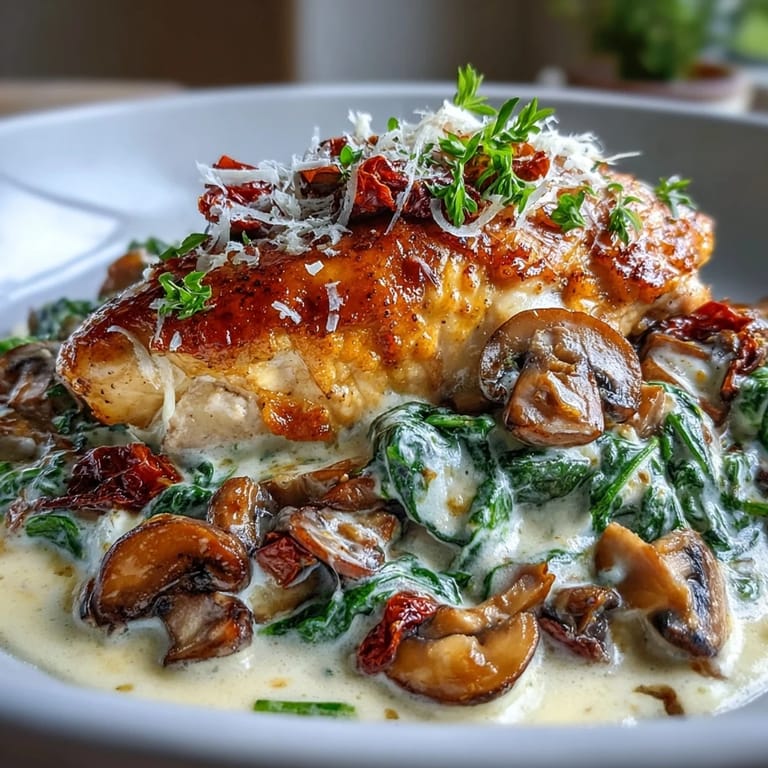
I made this for my sister's surprise dinner party, and I remember standing at the stove listening to the cream bubble gently while the spinach melted into dark green ribbons. My sister walked in just as I was finishing, and the smell hit her so perfectly that she actually closed her eyes. That's when I knew this wasn't just good food—it was the kind of dish that makes people feel cared for, even when they don't realize you made it on a whim.
Ingredients
- Boneless, skinless chicken breasts: Pat them completely dry before seasoning, which is the small move that makes them golden instead of steamed.
- Olive oil: Use something you actually enjoy—the quality shows up in that first sear when the chicken gets its gorgeous crust.
- Garlic, minced: Fresh garlic makes all the difference here, and mincing it small lets it disappear into the cream rather than sitting in chunks.
- Sun-dried tomatoes: The ones packed in oil are essential because they bring flavor and richness that you simply can't get from dried ones.
- Heavy cream: This is not the time to skimp or substitute, but if you must go lighter, half-and-half works with slightly less dramatic results.
- Chicken broth: The low-sodium version matters because you're adding Parmesan, which brings its own salt.
- Parmesan cheese, grated: If you have time, grate it fresh—pre-grated cheese sometimes doesn't melt as smoothly into the sauce.
- Fresh baby spinach: It wilts down to almost nothing, so don't be shy with how much you add.
- Dried basil and red pepper flakes: These are optional but they're what push this from creamy to actually interesting.
Tired of Takeout? 🥡
Get 10 meals you can make faster than delivery arrives. Seriously.
One email. No spam. Unsubscribe anytime.
Instructions
- Season and prepare your chicken:
- Pat your chicken breasts dry with paper towels—this matters more than you'd think because moisture is the enemy of a good sear. Season generously on both sides with salt, pepper, and Italian seasoning, getting the edges too.
- Get that first golden sear:
- Heat your olive oil in a large skillet over medium-high heat until it shimmers, then lay in your chicken. You'll hear it sizzle immediately, which is the sound of something good happening. Resist the urge to move it around—let it sit for 5 to 6 minutes until the bottom is deeply golden, then flip and cook the other side.
- Build your flavor base:
- Once the chicken is cooked through, move it to a plate and return the skillet to medium heat. Add your minced garlic and sun-dried tomatoes right into that residual oil, and let them toast for just a minute until the kitchen smells like an Italian grandmother's kitchen.
- Create the sauce magic:
- Pour in your heavy cream and chicken broth, scraping the bottom of the pan with a wooden spoon to loosen all those caramelized bits. This is called deglazing, and it's where ordinary pans become flavor-building machines.
- Melt in the cheese and seasonings:
- Add your Parmesan, dried basil, and red pepper flakes if you're using them. Stir constantly for 2 to 3 minutes and watch as the cheese dissolves and the sauce becomes silky and thick. Taste it here—adjust salt and pepper to your liking before moving forward.
- Wilt in the spinach:
- Add your baby spinach in handfuls, stirring as it collapses into the cream. It goes from this bright pile of leaves to dark, tender ribbons in about two minutes.
- Bring the chicken home:
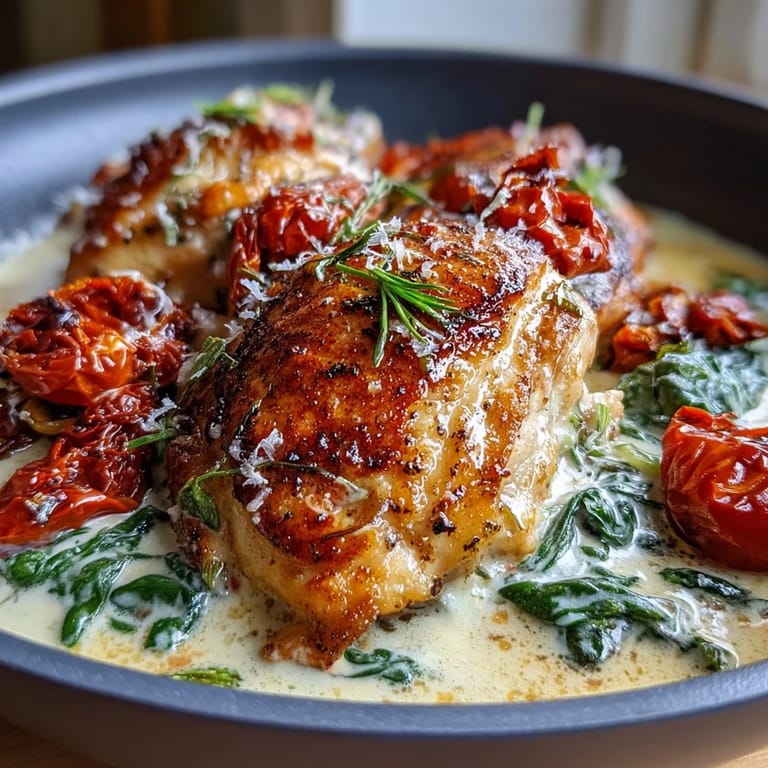
- Nestle your chicken back into the skillet, spoon that gorgeous sauce over the top, and let everything simmer together for 2 to 3 minutes. This final step lets the chicken absorb some of that creamy flavor.
- Finish with intention:
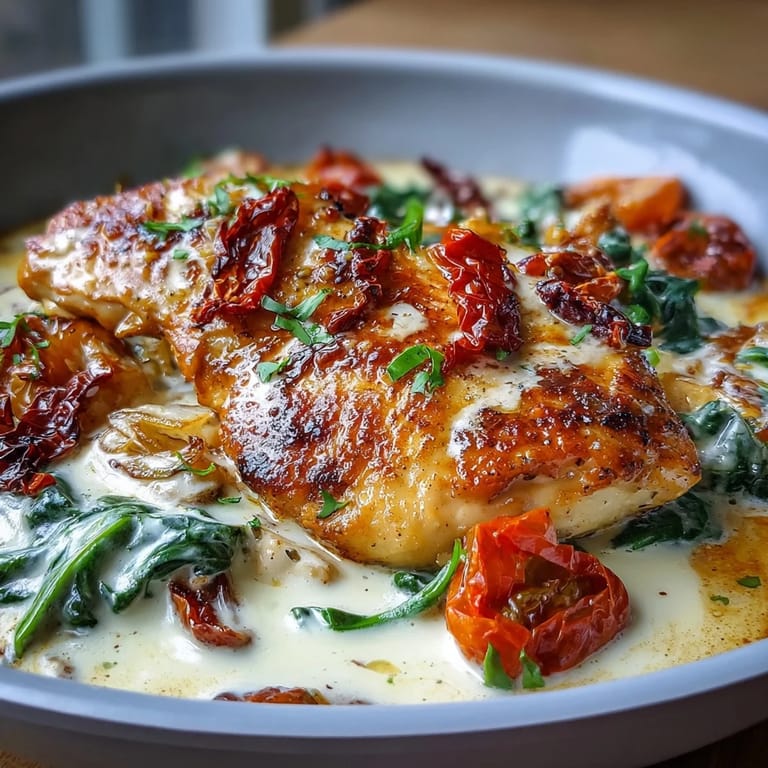
- Tear some fresh basil over the top if you have it, add a shower of extra Parmesan, and serve immediately while the sauce is still silky and the chicken is warm through.
 Save
Save What stays with me about this recipe is how simple it is, and how it never lets you down. My partner made it solo for the first time and called me from the kitchen with genuine pride in his voice—not because he'd done anything complicated, but because he'd made something delicious and real. That's the gift of this skillet dinner.
What Makes This Dish Work
The architecture of this recipe is almost mathematical in its balance. The cream provides richness, the sun-dried tomatoes bring concentrated tomato flavor without water that would thin out your sauce, the garlic gives you depth, and the spinach adds a brightness that keeps everything from feeling heavy. Each ingredient has a job, and they all show up on time. I've tried versions with roasted red peppers or mushrooms, and while those were fine, they felt like they were competing with the core flavor rather than supporting it. This recipe taught me that sometimes the most elegant dishes aren't the ones with the longest ingredient lists.
Why This Works as a Weeknight Dinner
Thirty-five minutes from start to finish means you're eating before anyone gets too hungry or cranky. The one-pan situation means you're not juggling multiple burners or coordinating timings. There's also something psychologically satisfying about bringing everything together in the same pan—it feels intentional rather than scattered. I've stopped feeling like a weeknight dinner has to be either quick and soulless or slow and elaborate. This recipe lives beautifully in the middle, delivering comfort food that doesn't require you to sacrifice your entire evening.
Serving and Storage Wisdom
This dish sings over pasta or rice, where that sauce can do its job properly. I've also served it alongside roasted vegetables or crusty bread, and both work beautifully. Leftovers keep in the refrigerator for three days, though I'll be honest—they rarely make it that long in my house. When you reheat, use low heat and add a splash of chicken broth if the sauce has tightened up in the fridge.
- Serve over fresh pasta, creamy mashed potatoes, or alongside crusty bread to catch every drop of sauce.
- Leftovers reheat gently on the stovetop with a touch more broth rather than in the microwave, which can break the sauce.
- This is also excellent served cold the next day over a simple salad if you happen to have extra.
 Save
Save This skillet has become my quiet victory—the recipe I make when I want to feel like I'm taking care of people without overthinking it. Every time I make it, I think about that first night with my sister, and it still makes me smile.
Recipe FAQs
- → Can I use chicken thighs instead of breasts?
Yes, boneless skinless chicken thighs can be used and will offer a juicier texture with similar cooking times.
- → How do I prevent the sauce from curdling?
Simmer the cream gently and avoid boiling after adding it to keep the sauce smooth and creamy.
- → What can I serve alongside this dish?
Steamed rice, mashed potatoes, or cooked pasta complement the creamy sauce well and make a hearty meal.
- → Is this dish suitable for gluten-free diets?
Yes, the ingredients used are gluten-free but always verify broth and sun-dried tomato packaging for gluten cross-contamination.
- → Can I substitute half-and-half for heavy cream?
Using half-and-half creates a lighter sauce, though the texture will be less rich and creamy.