 Save
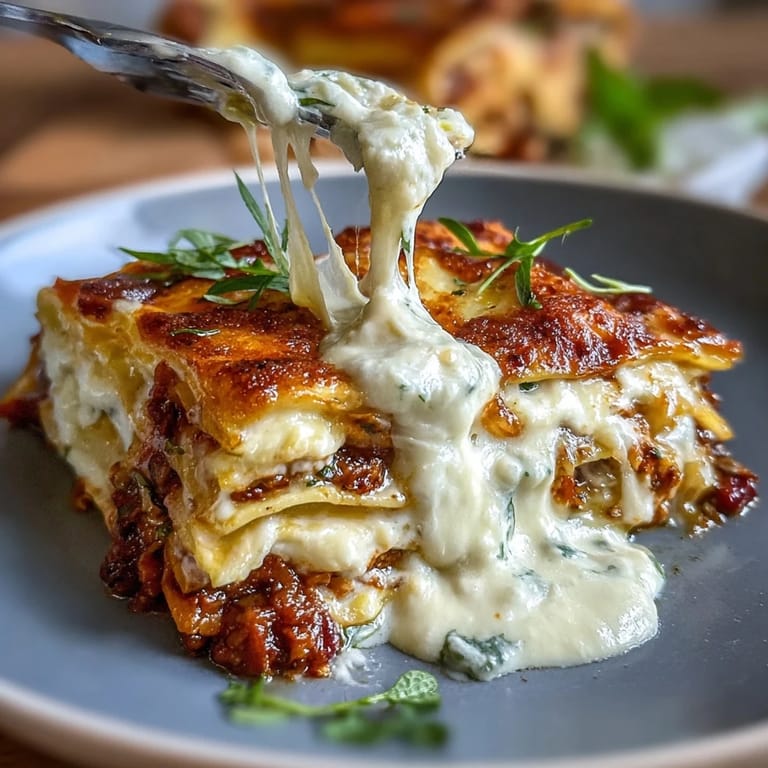
Save My kitchen smelled like a Spanish tapas bar the first time I layered this lasagne, thanks to that generous pinch of smoked paprika hitting the hot pan. I'd been craving something hearty but wanted to skip the traditional meat-heavy route, and somehow combining lentils with mushrooms felt like the right pivot. What started as an experiment in my ovenproof skillet turned into something I now make whenever I need comfort food that doesn't require multiple pots cluttering my sink. The beauty of it is that everything happens in one pan, then straight into the oven—minimal fuss, maximum flavor.
I served this to my sister on a rainy Sunday, and she came back into the kitchen asking what restaurant I'd ordered from—the fact that I'd made it in a single skillet seemed impossible to her. She sat at the counter watching the cheese bubble in the oven, and I caught her actually taking notes on her phone. That moment when she took a bite and just went quiet for a few seconds, then asked if I could teach her, made me realize this wasn't just dinner; it was the kind of dish that changes how people think about vegetarian cooking.
Ingredients
- Olive oil: Use good quality here since it's the foundation of your flavor base—it helps everything toast properly and carry those spice notes.
- Onion and garlic: These are your aromatic backbone, building depth before anything else joins the party.
- Carrot, red bell pepper, mushrooms, and courgettes: Each vegetable contributes something different—sweetness, earthiness, texture—so don't skip any of them.
- Smoked paprika: This is non-negotiable; it's what makes people ask what your secret ingredient is.
- Dried oregano and thyme: Fresh would be lovely, but dried herbs actually work better here since they release their flavor slowly during cooking.
- Chili flakes: Optional, but they add a gentle warmth that keeps the dish from feeling one-dimensional.
- Tomato paste and canned tomatoes: The paste concentrates flavor, and the canned tomatoes provide body and acidity.
- Soy sauce: A surprising touch that adds umami depth and makes the lentils taste more complex.
- Red lentils: They break down slightly and thicken the sauce naturally while staying nourishing and protein-rich.
- Vegetable stock: This keeps everything moist and prevents the lentils from becoming gummy.
- Unsalted butter and flour: Your béchamel foundation—measure carefully so it's silky, not lumpy.
- Whole milk: Warm it slightly before whisking to avoid lumps forming in your sauce.
- Ground nutmeg: Just a whisper makes the cream sauce taste sophisticated and velvety.
- Mature cheddar or hard vegetarian cheese: The sharpness cuts through the richness beautifully.
- No-boil lasagne sheets: They save time and somehow feel less fussy than the traditional method.
- Mozzarella topping: It melts into golden, bubbling bliss, creating those crispy edges everyone fights over.
Tired of Takeout? 🥡
Get 10 meals you can make faster than delivery arrives. Seriously.
One email. No spam. Unsubscribe anytime.
Instructions
- Get your oven ready and start the aromatics:
- Preheat to 200°C (180°C fan), then warm olive oil in your ovenproof pan over medium heat. Once it's shimmering, add the chopped onion and minced garlic, letting them soften for about two minutes until the raw sharpness mellows and the kitchen starts smelling alive.
- Build your vegetable base:
- Add the carrot, bell pepper, mushrooms, and courgettes, cooking for five to six minutes until everything's tender but still holding its shape. You're looking for the moment when the mushrooms release their moisture and darken slightly—that's when you know they're contributing all their umami depth.
- Add the warm spice and tomato foundation:
- Stir in the smoked paprika, oregano, thyme, and chili flakes, then cook for just one minute—this brief window lets the spices bloom and lose that raw edge. Add the tomato paste next, giving it a minute to caramelize slightly before the liquid goes in.
- Bring everything together with the lentils:
- Pour in the canned tomatoes, soy sauce, rinsed red lentils, and vegetable stock, then bring to a gentle simmer. Cover and let it cook for fifteen to twenty minutes, stirring occasionally, until the lentils have mostly broken down and the sauce has thickened to a rich, clingy consistency—this is your vegetable bolognese.
- Make the creamy béchamel sauce:
- In a separate pan, melt the butter over medium heat, then whisk in the flour to create a paste that cooks for about one minute. Gradually pour in the milk while whisking constantly to prevent lumps, then keep stirring until the sauce coats the back of a spoon, roughly five minutes total.
- Season the béchamel and remove from heat:
- Stir in the nutmeg, grated cheese, and a pinch of salt and white pepper, tasting as you go. The sauce should smell warm and slightly sweet, a perfect contrast to the savory lentil base waiting below.
- Begin layering in the ovenproof pan:
- Remove half the bolognese from your pan and set it aside on a plate. Spread one third of the béchamel over what remains in the pan, then top with lasagne sheets, breaking them to fit snugly into the edges.
- Add your first full layer:
- Spread half of the reserved bolognese over the pasta, pour another third of béchamel on top, and add another layer of lasagne sheets. The pan is already looking substantial and fragrant at this point.
- Top with the final layers:
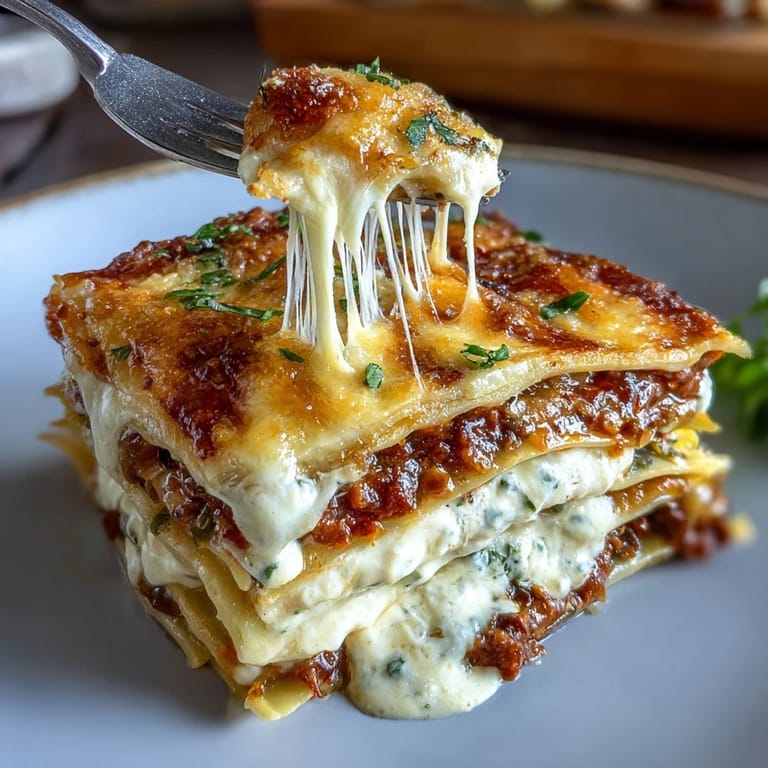
- Finish with the remaining bolognese, cover with your last lasagne sheets, and pour over the final third of béchamel. Sprinkle the grated mozzarella evenly across the top—this will melt into golden, crispy patches that everyone will want.
- Bake covered, then uncovered:
- Tent the pan loosely with foil and bake for twenty-five minutes, then remove the foil and bake for another ten to fifteen minutes until the top is golden and bubbling at the edges. The foil traps steam and keeps the lasagne moist, while the final stretch lets the cheese catch color.
- Rest and serve:
- Let it sit for about ten minutes out of the oven—this helps it set enough to cut cleanly without falling apart. Garnish with fresh basil if you have it, and serve alongside something fresh and bright to balance the richness.
 Save
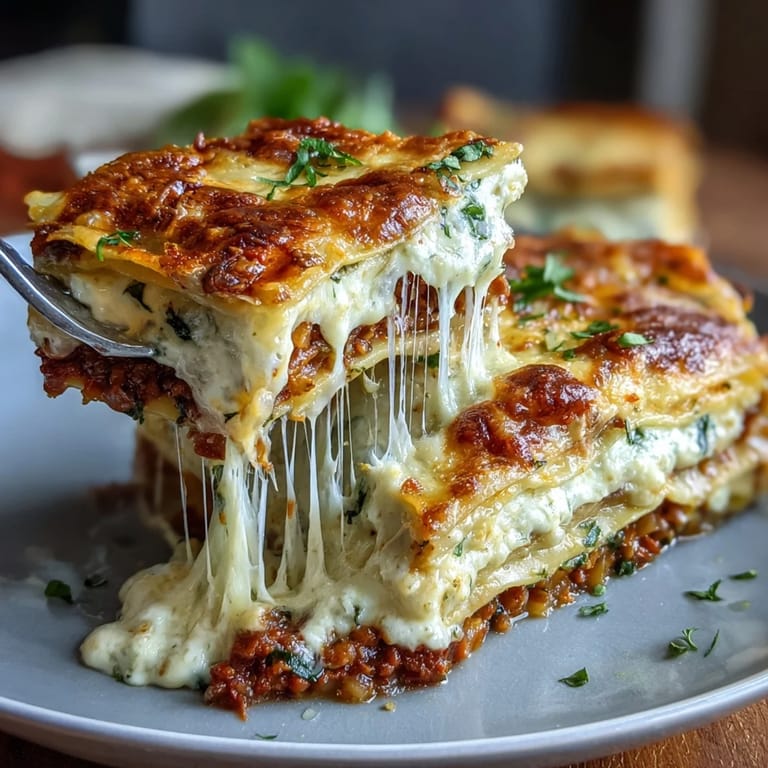
Save What strikes me most about this dish is how it somehow feels indulgent and nourishing at the same time—creamy and comforting without the heaviness of traditional meat-based lasagne. My partner once said it tasted like someone had translated his favorite Italian restaurant meal into plant-based language, and I think that's exactly what's happened here.
Why the One-Pan Method Works So Well
Using an ovenproof skillet changes everything about how this dish cooks and tastes. The bolognese starts on the stovetop where you can coax maximum flavor from sautéing and simmering, building layers of depth before you ever touch a lasagne sheet. Then it goes straight into the oven without being transferred, which means less cleanup and fewer chances for disaster. I've made this in a traditional baking dish too, and while it works perfectly fine, there's something about finishing it in the same vessel where the sauce developed that feels more connected and intentional.
The Secret to Creamy Béchamel
Temperature control is everything when you're making béchamel from scratch. I learned this the hard way after curdling more than one batch when I got impatient and dumped cold milk into hot roux. Now I always warm the milk slightly before pouring, and I whisk like my life depends on it while the liquid goes in. If you're using the full fat milk and the right ratio of butter to flour, you should end up with something silky and rich that holds the layers together beautifully.
Vegetable Prep and Customization
The vegetables I've listed are the ones that have worked most consistently in my testing, but this is genuinely flexible depending on what you have or prefer. I've swapped the bell pepper for celery, used spinach instead of or alongside the courgettes, and even thrown in diced sweet potato for sweetness. The mushrooms are really the only non-negotiable ingredient beyond the lentils, because they provide that hearty, substantial texture that makes people forget meat isn't involved. You can prep everything the night before if you're cooking for guests—just keep the chopped vegetables in the fridge in separate containers so nothing gets soggy or oxidizes.
- Dice everything fairly uniformly so it all cooks in the same timeframe.
- If using fresh herbs instead of dried, add them right at the end so they stay bright and aromatic.
- Taste the bolognese and season boldly with salt and pepper—it should taste almost overseasoned on its own, because the béchamel will balance it out.
 Save
Save This lasagne sits happily on the table with a simple green salad and crusty bread, and somehow it feels both elegant enough for guests and comforting enough for a quiet night in. There's real magic in a dish that checks both boxes.
Recipe FAQs
- → Can I make this lasagne ahead of time?
Yes, assemble the lasagne up to 24 hours in advance, cover tightly, and refrigerate. Bake for an additional 10-15 minutes if baking from cold.
- → What gives this lasagne its smoky flavor?
The smoked paprika is the key ingredient that provides the signature smoky taste. Don't skip it—it transforms the entire dish.
- → Can I use green lentils instead of red?
Red lentils work best as they cook quickly and break down slightly, creating a thicker sauce. Green lentils remain firmer and require longer cooking time.
- → How do I know when the lasagne is done?
The lasagne is ready when the cheese is golden and bubbling, and the pasta feels tender when pierced with a knife. Let it rest for 10 minutes before serving.
- → Can I freeze leftovers?
Yes, individual portions freeze well for up to 3 months. Thaw overnight in the refrigerator and reheat in the oven at 180°C until piping hot.
- → What size pan should I use?
A large ovenproof frying pan or deep skillet, approximately 28-30cm in diameter, works perfectly. It needs to be deep enough to hold all the layers.