 Save
Save My neighbor Marcus brought a pot of his grandmother's Hoppin John to a block party years ago, and I watched people line up for seconds without hesitation. When he eventually shared the recipe, I realized the magic wasn't just nostalgia, it was the building of flavor, layer by layer. So I set out to make it vegetarian without losing that smoky, soulful depth, and after some experimentation with smoked paprika and proper spice ratios, I finally cracked it. Now this version sits on my stove whenever I want something that feels both grounding and celebratory, and honestly, nobody at the table even notices the peas are doing all the heavy lifting.
I made this for my partner on a cold February evening when we'd both had the kind of day that needed something warm and uncomplex. There was no pretense, just the smell of cumin and thyme filling the kitchen while we caught up about life. By the time it was done simmering, everything felt a little softer, and somehow the meal became what we needed more than what we'd planned for.
Ingredients
- Olive oil: Just enough to get everything moving in the pot without making it heavy, one tablespoon creates a good foundation for sautéing.
- Medium onion, diced: This is your base, the thing that transforms into sweetness as it softens, so don't rush this step.
- Green bell pepper, diced: Brings a subtle vegetal brightness that balances the earthiness of the peas.
- Celery stalks, diced: The often-overlooked workhorse that adds body and depth without announcing itself.
- Garlic, minced: Three cloves is the sweet spot, enough to whisper through the dish without overpowering.
- Black-eyed peas, canned: Drain and rinse them well to remove excess sodium and any starchy coating, which keeps the broth clear and clean tasting.
- Smoked paprika: This is the secret weapon, two teaspoons gives you that barbecue-adjacent depth that makes people think you've been cooking for hours.
- Dried thyme and oregano: One teaspoon each keeps things herbaceous without muddying the flavor profile.
- Ground cumin: Warm and earthy, one teaspoon bridges the gap between Southern and something slightly unexpected.
- Cayenne pepper: Keep it optional and to hand, heat preference is personal and you can always add more.
- Sea salt and black pepper: Taste and adjust near the end, canned broths already carry salt so start conservative.
- Bay leaves: Two of them, then removed before serving, they work quietly to tie everything together.
- Low-sodium vegetable broth: Two cups gives you enough liquid to simmer down gently without drying out.
- Soy sauce or tamari: Just a tablespoon adds umami depth and a whisper of salty richness.
- Cooked rice: Long-grain white or brown, fluffy and warm, the bed for everything else.
- Fresh parsley or cilantro: A quarter cup chopped at the very end brings brightness and a reason to take a second bite.
- Green onions: Two sliced thin, they add a crisp bite that cuts through the richness beautifully.
- Lemon wedges: Optional but they're your escape hatch if you want to brighten it up at the last second.
Tired of Takeout? 🥡
Get 10 meals you can make faster than delivery arrives. Seriously.
One email. No spam. Unsubscribe anytime.
Instructions
- Build your base:
- Heat the olive oil in a large pot over medium heat and add your onion, bell pepper, and celery. You want them to soften and start losing their raw edges, which takes about five to six minutes, and you'll notice the kitchen starts smelling like something is happening. Stir occasionally so nothing sticks to the bottom.
- Wake up the garlic:
- Once the vegetables are soft, add your minced garlic and let it cook for just one minute until you can smell it directly, that sharp aromatic moment that means it's ready. Don't let it brown or it turns bitter.
- Toast the spices:
- This is crucial: add your smoked paprika, thyme, oregano, cumin, cayenne if you're using it, black pepper, and salt all at once. Stir everything together so the spices coat the vegetables and you get that toasted, warm smell rising up. This is where the magic starts, so take a moment and really notice what's happening in the pot.
- Bring in the peas:
- Pour in your drained black-eyed peas, vegetable broth, soy sauce, and slide in those bay leaves. Stir it all together until the liquid and spices are evenly distributed.
- Let it simmer:
- Bring the whole thing to a gentle simmer, then turn the heat down low and leave it uncovered for twenty to twenty-five minutes. Stir occasionally, watching as the liquid reduces slightly and the flavors start to meld together into something unified. The peas will soften more and the broth will thicken just a little, which is exactly what you want.
- Finish and taste:
- Remove the bay leaves and take a taste, then adjust salt or spice as needed. This is your chance to make it your own, so don't be shy about adding more of what speaks to you.
- Serve with intention:
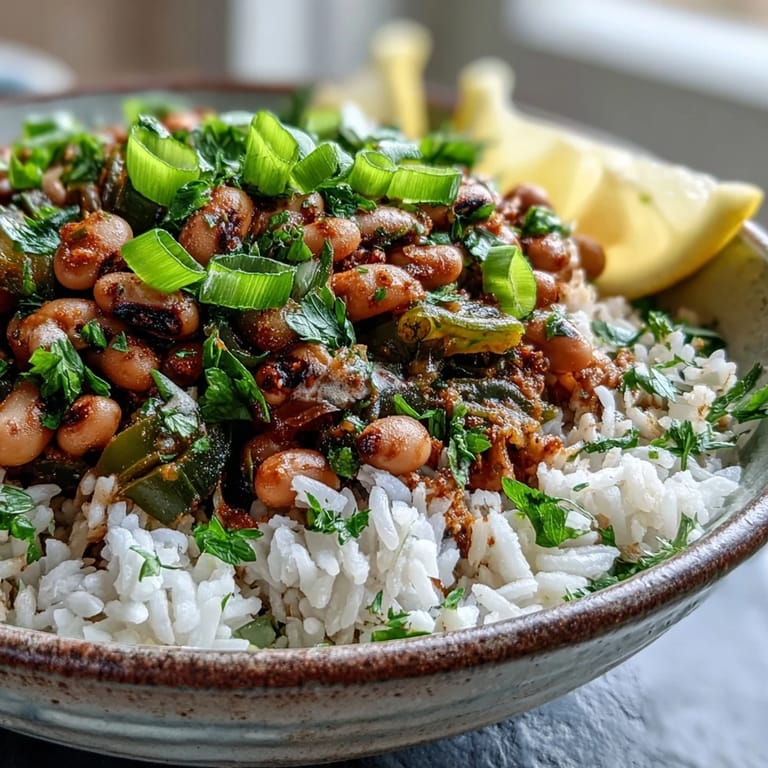
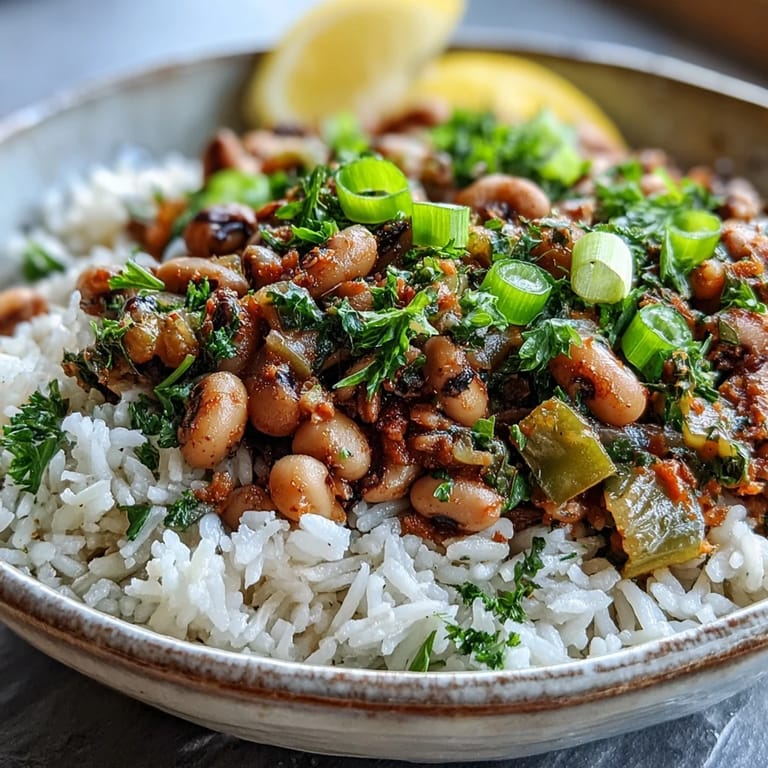
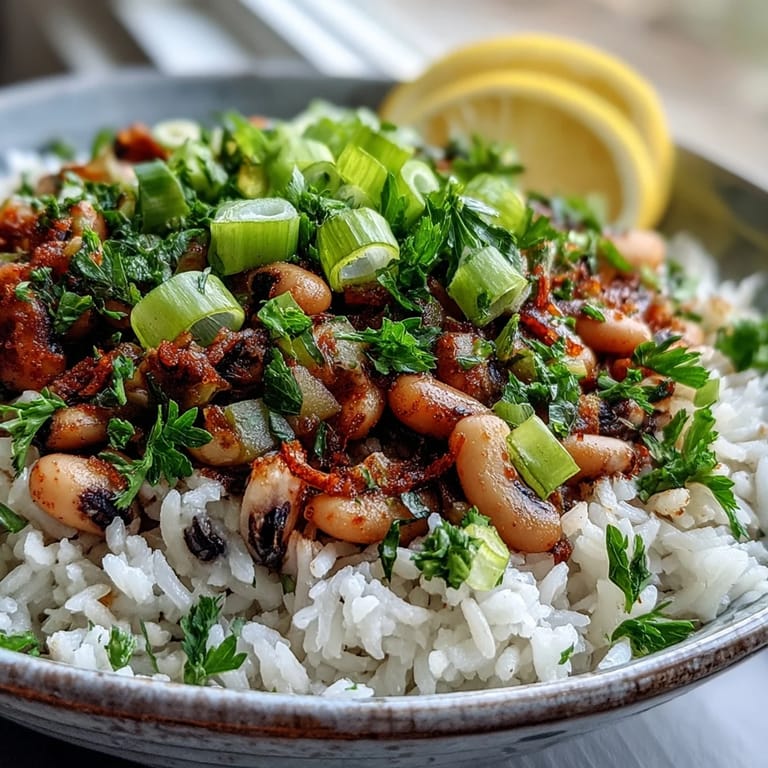
- Spoon the Hoppin John over warm rice, then scatter fresh parsley or cilantro and green onions on top. A squeeze of lemon at the table lets people customize their own bite.
 Save
Save There's a moment during the simmering when the whole kitchen smells like generosity, and I realized this dish has always been about more than just dinner. It's about gathering, about making something that feels substantial without pretending to be fancier than it is, about feeding people something that sticks with them in the best way.
The Vegetarian Tradition
Hoppin John has roots in African American and Southern cooking traditions, often served around New Year's as a sign of prosperity and good fortune. The beauty of reimagining it as fully vegetarian is that it honors the dish while making it accessible to more people at the table, and honestly, the black-eyed peas are already the star, they don't need anyone else's permission to shine. When you serve this, you're participating in something that's been fed forward through generations, just with your own spin.
Flavor Building and Depth
The smoked paprika is doing heavy lifting here, giving you the warmth and depth that traditionally comes from meat or meat-based broths. The combination of cumin, thyme, and oregano keeps it in Southern territory while the soy sauce adds an umami note that makes everything taste more layered and complete. Understanding how these spices work together is the difference between a pot of beans and something people actually want to eat.
Serving and Variations That Work
This dish is flexible in the best way, happiest served over rice but also beautiful alongside collard greens or with hot sauce on the side if someone wants more edge. I've swapped in pinto beans when that's what I had, and added a dash of liquid smoke for extra depth on days when I wanted it even smokier. The rice is your canvas, but the Hoppin John itself is sturdy enough to stand alone with just the fresh herbs bringing it home.
- Serve it warm the same day or reheat gently the next day, it actually deepens after sitting overnight.
- A squeeze of fresh lemon at the table is optional but changes the final note from savory to bright.
- This makes enough for four people with maybe a container left over, which reheats beautifully and tastes even better.
 Save
Save This Hoppin John has become one of those dishes I make when I want to remember why cooking matters, why feeding people matters. It's simple enough to not feel like a project, but soulful enough to feel like care.
Recipe FAQs
- → What makes this version vegetarian?
This plant-based version replaces traditional pork with smoked paprika and soy sauce to achieve that signature smoky, savory depth. The combination of aromatic vegetables and carefully selected seasonings creates the same rich flavor profile without any meat products.
- → Can I use dried black-eyed peas instead of canned?
Absolutely. Soak dried peas overnight, then simmer for about 45-60 minutes until tender before adding to the vegetables. You may need to adjust the cooking time and add more broth as the dried peas absorb more liquid than canned ones.
- → How long do leftovers keep?
Store cooled leftovers in an airtight container in the refrigerator for up to 4-5 days. The flavors continue to develop and meld over time, often tasting even better the next day. Reheat gently on the stove with a splash of water or broth to loosen the mixture.
- → Can I freeze this dish?
Yes, this freezes exceptionally well. Let it cool completely, then transfer to freezer-safe containers or bags. It will keep for up to 3 months in the freezer. Thaw overnight in the refrigerator before reheating.
- → What sides pair well with Hoppin John?
Collard greens, cornbread, or a simple green salad complement this dish beautifully. Some enjoy hot sauce on the side for extra heat, while others appreciate pickled vegetables to cut through the richness.