 Save
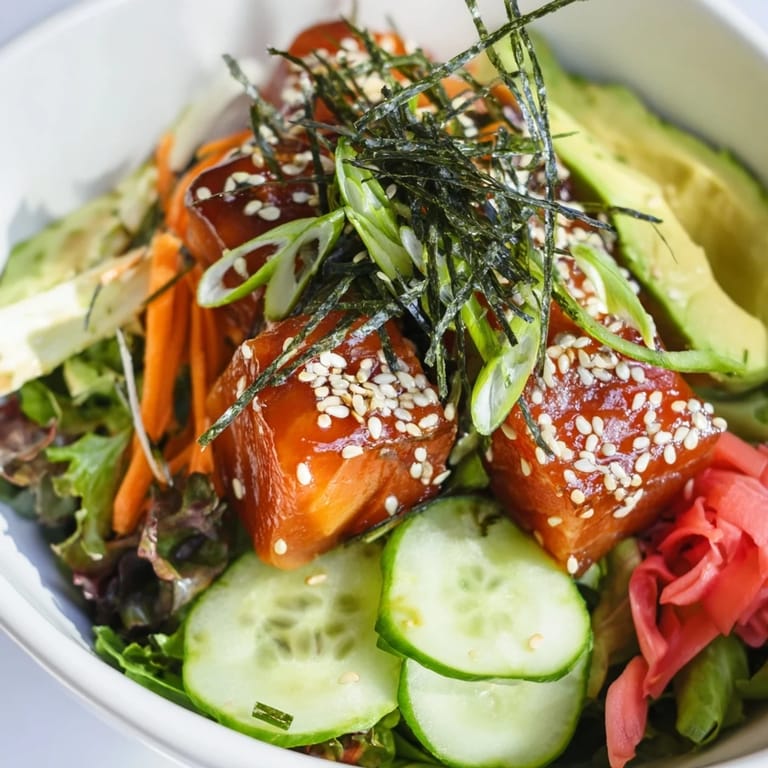
Save I stumbled onto this poke bowl concept on a sweltering afternoon when my fridge had little more than some pristine sushi-grade salmon, half a cucumber, and whatever greens hadn't wilted in the heat. My partner wandered into the kitchen asking what dinner might be, and instead of ordering takeout like I normally would, I started dicing the fish and mixing together a quick marinade that smelled like a fusion restaurant. Twenty minutes later, we were eating something so fresh and bright it felt like we'd just been to Hawaii instead of staying home.
There's a quiet satisfaction to assembling this bowl at lunchtime, especially on days when the office feels too warm and you need something clean and energizing. I once brought mine to a work picnic, and three people asked for the recipe before I'd even finished eating—one colleague actually bought sushi-grade fish that same week and sent me a photo of her version. That's when I realized how much power a simple, beautiful bowl of food holds.
Ingredients
- Sushi-grade salmon or tuna, cubed: This is where quality truly matters; ask your fishmonger specifically for sushi-grade so you can eat it raw with confidence.
- Soy sauce: The umami backbone of the whole dish, though tamari works seamlessly if you need gluten-free.
- Sesame oil: Just a tablespoon transforms everything into something nutty and sophisticated.
- Rice vinegar: The bright acid that keeps the marinade from feeling heavy.
- Fresh ginger and garlic: Grate the ginger by hand if you can; it releases oils that make a noticeable difference.
- Honey or maple syrup: A small touch of sweetness that balances the salt beautifully.
- Mixed greens: Use whatever feels fresh; I've done this with baby spinach on busy weeks and fancy lettuces when I wanted to impress.
- Cucumber, avocado, and carrots: The vegetables add texture and color, though honestly you can swap them for whatever you have on hand.
- Cooked rice (optional): Brown rice, sushi rice, or even cauliflower rice all work depending on what you're in the mood for.
- Sesame seeds, scallions, nori, and pickled ginger: These toppings are where you get to have fun and add your personal touch.
Tired of Takeout? 🥡
Get 10 meals you can make faster than delivery arrives. Seriously.
One email. No spam. Unsubscribe anytime.
Instructions
- Mix Your Marinade:
- Whisk soy sauce, sesame oil, rice vinegar, grated ginger, honey, and minced garlic together in a bowl until the honey dissolves and everything smells aromatic. Taste it straight from a spoon—this is your moment to adjust the flavors before the fish goes in.
- Marinate the Fish:
- Add your cubed salmon or tuna to the marinade and toss gently so each piece gets coated without breaking apart. Cover and refrigerate for at least 10 minutes; the marinade will start to cure the fish slightly, deepening the flavor.
- Build Your Base:
- While the fish marinates, arrange your greens, cucumber, avocado, carrots, and rice (if using) in individual bowls or on plates. This is the foundation, so layer it however feels balanced and appetizing to you.
- Add the Fish:
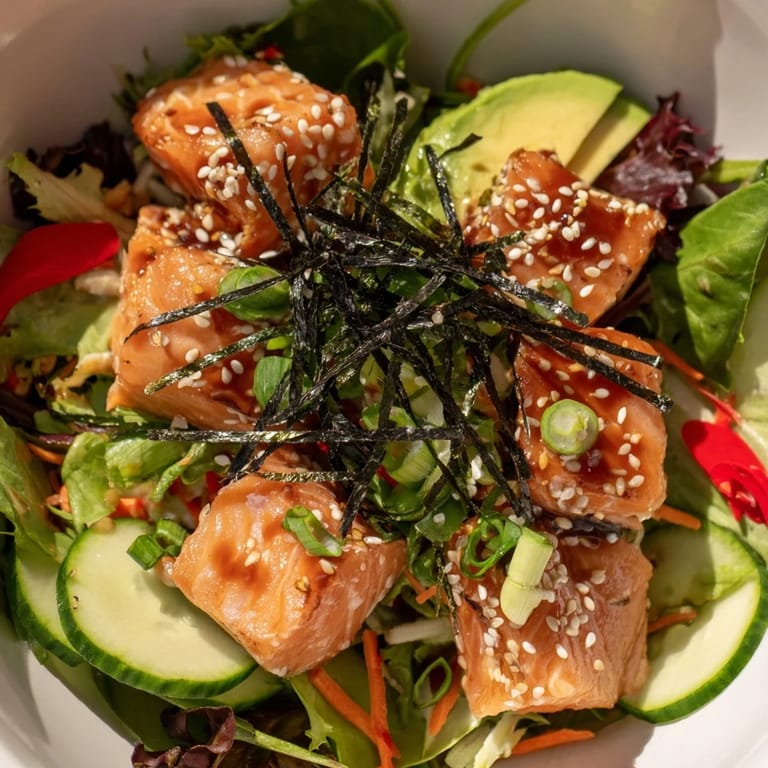
- Spoon the marinated fish directly over your salad base, making sure to pour some of that gorgeous marinade over the top as well. The liquid will dress the whole bowl.
- Finish and Garnish:
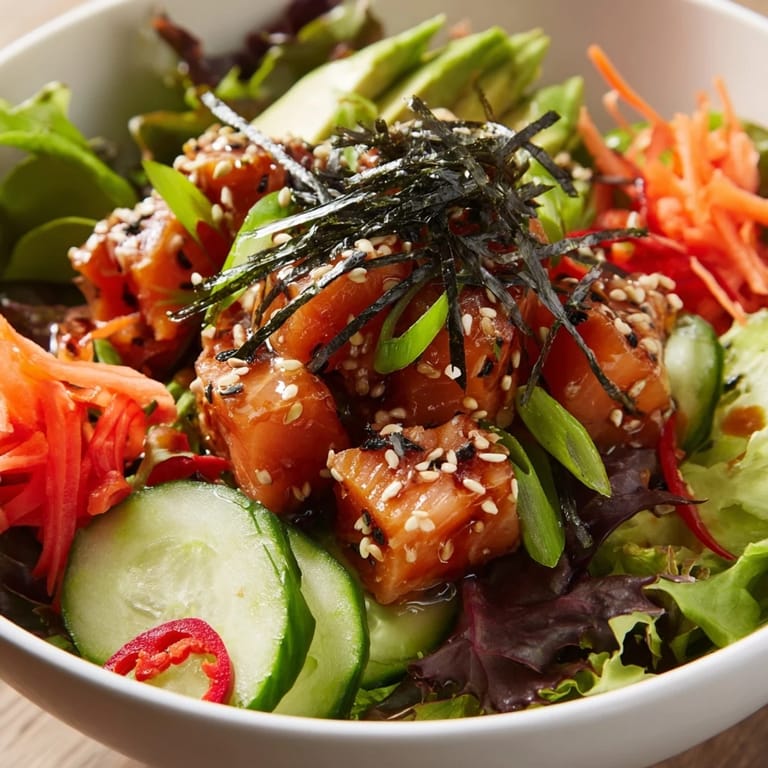
- Scatter sesame seeds, scallions, nori strips, pickled ginger, and red chili (if you like heat) over each bowl. The contrast of textures and colors is half the pleasure of eating this.
 Save
Save I remember making this for my sister the weekend she was stressed about a job interview, and watching her take that first bite, close her eyes, and exhale—it felt like the salad itself was a kind of permission to slow down for a moment. Sometimes the simplest meals are the ones that hit when you need them most.
Why This Works as a Meal
The genius of a poke bowl is how it balances protein, healthy fats, fresh vegetables, and complex carbs all in one place, which means you feel satisfied without that heavy, sluggish afternoon feeling. The raw fish cooks nothing and wastes no energy, so on those nights when you're already tired, you're not standing over a stove. It's one of those meals that feels indulgent and nutritious at the exact same time, which is rare.
Making It Your Own
One of the best parts about building bowls is that there's no wrong combination if you start with the marinade and fresh fish as your anchor. I've added crispy shallots for crunch, used lime juice instead of rice vinegar, swapped in edamame, even topped it with a soft-boiled egg once when I had one around. The recipe is a template, not a rulebook.
Timing and Serving
You can prep all the components in advance and assemble everything just before eating, which makes this a dream for meal prep or quick weeknight dinners. The marinade actually improves if it sits for a couple of hours, and the vegetables can be cut and stored separately for up to a day. Just don't combine everything until you're ready to eat, or the greens will wilt.
- Keep the marinated fish cold until the last moment so it stays fresh and flavorful.
- If you're feeding a group, set up a bowl bar and let people customize their own combinations.
- Serve immediately after assembling so the textures stay crisp and the fish stays properly chilled.
 Save
Save This bowl has become my go-to when I want to feel like I'm taking care of myself without much fuss. It tastes like a getaway even when you're eating at your kitchen table.
Recipe FAQs
- → What type of fish is best for this bowl?
Sushi-grade salmon or tuna cut into cubes works best to provide fresh and tender texture with rich flavor.
- → Can I make this dish gluten-free?
Yes, using gluten-free tamari instead of regular soy sauce ensures the marinade suits gluten-free diets.
- → How long should I marinate the fish?
Allow the fish to marinate for at least 10 minutes to absorb the soy-ginger flavors without losing its fresh texture.
- → What are good vegetarian alternatives for the fish?
Diced marinated tofu or tempeh provide a satisfying plant-based protein substitute while maintaining the dish’s fresh profile.
- → What side dishes pair well with this bowl?
A crisp white wine such as Sauvignon Blanc or a side of edamame and radish adds complementary fresh and crunchy notes.