 Save
Save There's a particular moment in late April when the kitchen suddenly smells like sunshine—that's when I know it's time to make lemon mousse cups. A friend once described eating one while sitting on a terrace overlooking a garden, and somehow that image stuck with me. Now whenever spring arrives with its tentative warmth, I find myself reaching for lemons and butter, ready to layer something light and airy that tastes like the season itself.
I made these for the first time when my partner mentioned being tired of dense desserts. Watching their face when they tasted that first spoonful—the crumble giving way to the cloud-like mousse—felt like I'd just solved a puzzle. That quiet moment of someone actually enjoying what you've made is better than any compliment.
Ingredients
- All-purpose flour: The foundation of your crumble base, and it needs to be cold-mixing territory because warm flour gets dense.
- Granulated sugar: Split between the crumble and mousse—part of what gives the crumble its subtle sweetness and the mousse its delicate balance.
- Unsalted butter (cold and cubed): This is non-negotiable; the cold butter is what creates those little pockets that make the texture actually crumbly rather than sandy.
- Salt: Just a whisper, but it wakes up all the other flavors and keeps the sweetness from becoming cloying.
- Large eggs (separated): The yolks thicken the lemon curd over gentle heat while the whites become your cloud when beaten properly.
- Freshly squeezed lemon juice: Bottled juice will taste tired by comparison; fresh lemons give you that bright, almost sharp edge that defines this dessert.
- Finely grated lemon zest: Two teaspoons might seem small, but this is where the real lemon flavor lives, concentrated and pure.
- Heavy cream (chilled): The secret to that impossibly light texture; whipped cream folded in gently adds volume without heaviness.
- Cream of tartar: Optional but worth keeping on hand for egg whites, it stabilizes them and keeps them from weeping later.
Tired of Takeout? 🥡
Get 10 meals you can make faster than delivery arrives. Seriously.
One email. No spam. Unsubscribe anytime.
Instructions
- Get your oven ready and prepare the stage:
- Preheat to 350°F and line your baking sheet with parchment paper so your crumble doesn't stick and gets those beautiful golden edges.
- Build the shortbread crumble:
- Combine flour, sugar, salt, and those cold butter cubes in a bowl, then rub everything together with your fingertips until it looks like coarse sand. This is therapeutic work, and you'll know you're done when there are no butter streaks left.
- Bake until golden:
- Spread it out evenly and bake for 12 to 15 minutes, stirring halfway through so it browns evenly. You're looking for that deep golden color that signals real flavor development.
- Make your lemon curd base:
- Whisk egg yolks with half the sugar, fresh lemon juice, and zest in a heatproof bowl, then set it over simmering water and whisk constantly for about 7 minutes until it thickens enough to coat the back of a spoon. The gentle heat is crucial—rush this and you'll scramble the eggs, go too slow and it won't thicken.
- Whip your egg whites to peaks:
- In a clean bowl, beat them with cream of tartar until soft peaks form, then gradually add the remaining sugar and keep beating until stiff peaks form. This takes a few minutes but the transformation is remarkable.
- Whip the cream separately:
- Chill your bowl and whisk first, then whip the heavy cream to soft peaks—you want it fluffy but still able to fold without deflating.
- Fold everything together with care:
- Start by gently folding the whipped cream into your cooled lemon mixture, then fold in the egg whites with a light hand and a rubber spatula. Stop as soon as you don't see white streaks anymore; overworking this deflates all your aerated elements.
- Layer and chill:
- Spoon shortbread crumble into the bottom of six glasses or ramekins, top with lemon mousse, then refrigerate for at least 2 hours while the flavors settle and the texture firms up just slightly.
- Finish with grace:
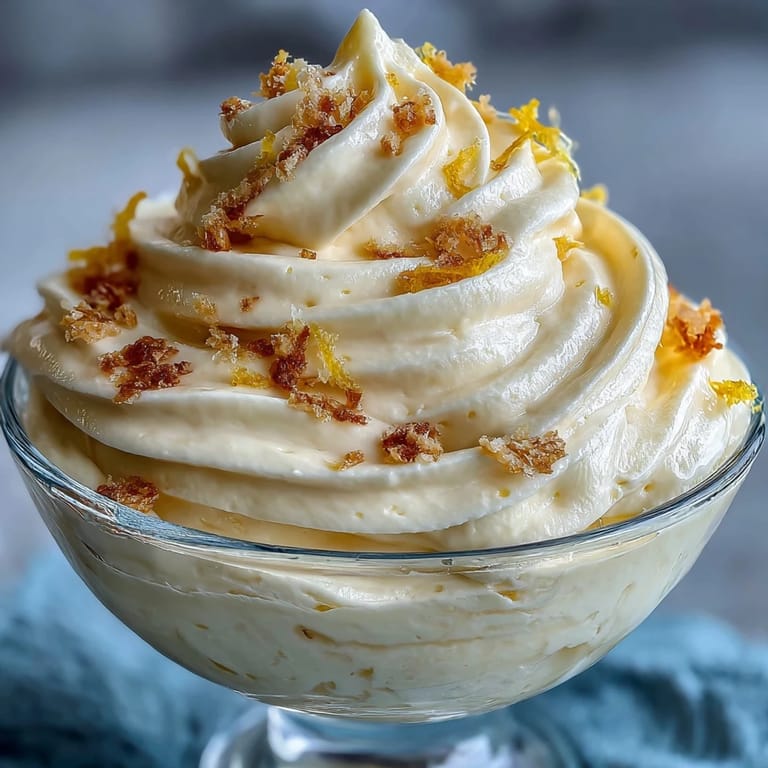
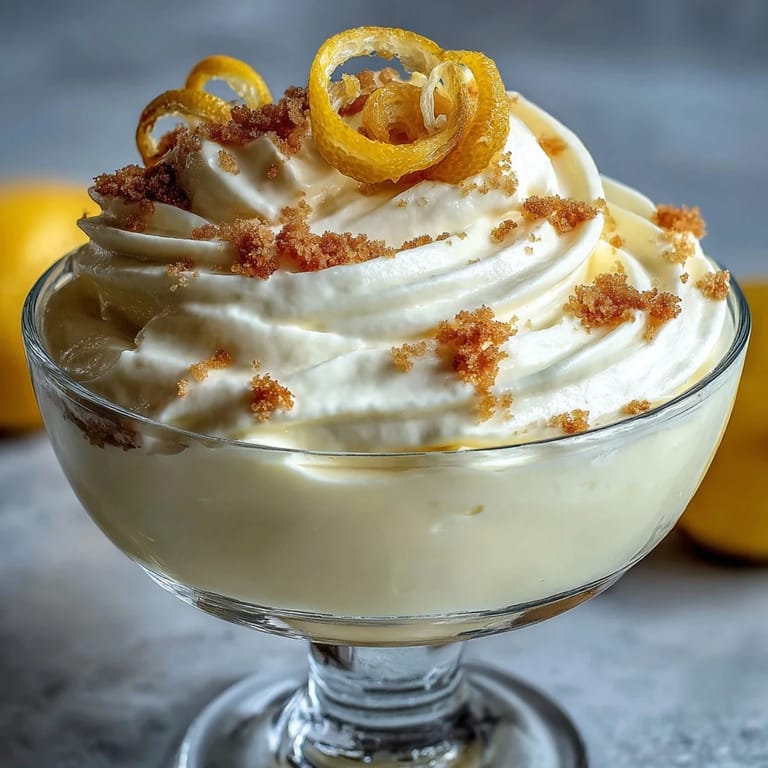
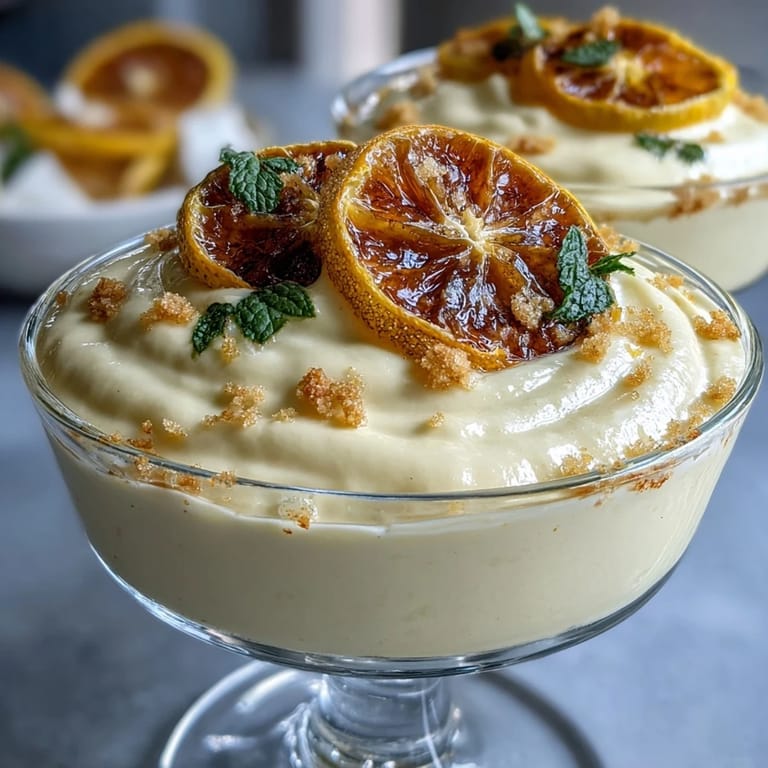
- Top each cup with fresh berries, lemon zest curls, and mint leaves if you're feeling fancy, or leave them plain if you want the lemon to be the star.
 Save
Save I once brought these to a dinner party where I didn't know anyone very well, and somehow they became the thing everyone asked about. By dessert time, the conversation had shifted from polite to genuine, and these little cups felt like they had something to do with that. Food can do that—bridge gaps in ways you don't expect.
The Art of Not Overworking Your Mousse
The biggest thing I've learned about mousse is that it's already delicate, and your job is to keep it that way. When you're folding, use a rubber spatula and think of it as tucking rather than stirring. Work from the bottom of the bowl, folding the mixture up and over itself, rotating the bowl as you go. It takes maybe a minute, and resisting the urge to keep going is actually the hardest part.
Why Fresh Lemon Juice Changes Everything
Bottled lemon juice has been preserved, processed, and honestly, something essential gets lost in translation. Fresh squeezed lemon juice has a brightness that tastes alive, with subtle variations depending on the season and where the lemons came from. I notice the difference immediately when I taste it—the mousse sings rather than just tastes like lemon dessert. It's worth the two minutes of squeezing.
Variations and Adaptations
Once you understand how this dessert works, you start seeing possibilities everywhere. I've made versions with lime and coconut cream, with orange and a hint of cardamom, even with lavender and lemon together. The structure stays the same—a crumbly base, an aerated mousse, a short chill—but the personality changes completely. That's the mark of a good recipe: it teaches you principles you can play with.
- For gluten-free versions, use a quality gluten-free flour blend and handle it the same way—the cold butter method still works beautifully.
- Toasted chopped almonds or pistachios mixed into the crumble add a sophisticated textural layer that keeps things interesting.
- A pour of Moscato or Prosecco alongside these cups turns an ordinary dessert into something that feels intentional and celebratory.
 Save
Save Making lemon mousse cups has become my way of saying welcome to spring, or thank you to someone who matters, or just because the lemons looked perfect at the market. That's really all a recipe needs to be—something that brings a little brightness to ordinary days.
Recipe FAQs
- → How do you achieve the light texture of the mousse?
Whipping egg whites to stiff peaks and folding them gently into the lemon mixture creates an airy and delicate mousse texture.
- → What makes the shortbread crumble crisp?
Cold cubed butter mixed with flour and sugar, then baked until golden, results in a crisp and buttery crumble base.
- → Can the dessert be prepared ahead of time?
Yes, chilling the assembled cups for at least two hours helps the mousse set and enhances the flavors.
- → Are there suitable substitutions for gluten-free diets?
Using a gluten-free flour blend in place of all-purpose flour works well for the crumble component.
- → What garnishes complement this dessert best?
Fresh berries, lemon zest curls, and mint leaves add vibrant color and refreshing notes.