 Save
Save My grandmother used to say that Hoppin' John wasn't just a recipe, it was an investment in the year ahead. Every New Year's Day, her kitchen would fill with the smell of bacon and simmering peas while she insisted that anyone who didn't eat a spoonful wouldn't have good luck. I didn't understand the superstition as a kid, but I understood the comfort—that deep, savory warmth that only comes from bacon fat, onions, and peas cooked low and slow.
I made this for a New Year's potluck once where nobody knew what Hoppin' John was, and by the end of the night, three people were asking for the recipe. There's something about serving food with a story attached—especially one about luck and tradition—that makes people slow down and actually taste what's on their plate.
Ingredients
- Thick-cut bacon (6 oz): Don't skimp here—the fat and smokiness are doing most of the work, so bacon that actually has substance makes a real difference.
- Onion, celery, and garlic: This trio is the backbone; when they're properly chopped and softened in the bacon fat, they build flavor that carries the whole dish.
- Green bell pepper (optional): If you use it, add it early with the onion and celery so it softens evenly and contributes sweetness.
- Dried black-eyed peas (1½ cups): Soaking them overnight is worth the planning—it cuts cooking time and helps them stay tender without falling apart.
- Chicken or vegetable broth (4 cups): Use low-sodium so you control the salt; the peas will absorb the flavor as they simmer.
- Bay leaf, thyme, and cayenne: These are quiet additions but essential—bay leaf adds depth, thyme brings earthiness, and cayenne gives a whisper of heat if you want it.
- Long-grain white rice (2 cups): The fluffy bed underneath catches all that savory broth; resist the urge to stir it too much while it cooks.
- Scallions and hot sauce: These are your finishing touches—brightness from the scallions and optional heat from the sauce let people customize their own bowl.
Tired of Takeout? 🥡
Get 10 meals you can make faster than delivery arrives. Seriously.
One email. No spam. Unsubscribe anytime.
Instructions
- Render the bacon until it's actually crispy:
- Cook it over medium heat in your largest pot, listening for it to shift from sizzling softly to popping and crackling. Remove half for garnish, but leave the fat behind—that's liquid gold for everything else.
- Build your flavor base with the vegetables:
- Throw onion, celery, and pepper into the bacon fat and let them soften for about five minutes, stirring occasionally so they get coated and start to caramelize at the edges. Add garlic last, just for a minute, so it wakes up the whole pot.
- Add the peas and let them become tender:
- Pour in the soaked peas, broth, bay leaf, and spices, then bring everything to a boil before turning it down to a gentle simmer. You're looking for peas that are soft enough to bite through easily but still hold their shape—usually 35 to 45 minutes if you soaked them, faster if you're using canned.
- Cook the rice while the peas do their thing:
- Combine rice, water, butter, and salt in a separate saucepan and bring it to a boil, then immediately lower the heat, cover it, and leave it alone for 15 minutes. The hands-off part is important—peeking or stirring breaks the steam and makes it come out gummy instead of fluffy.
- Bring it all together on the plate:
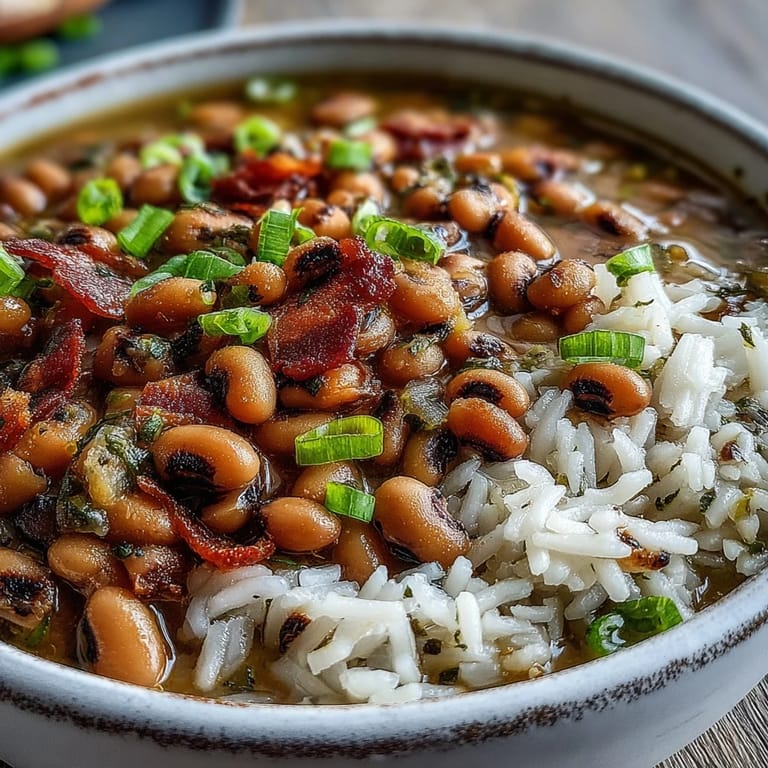
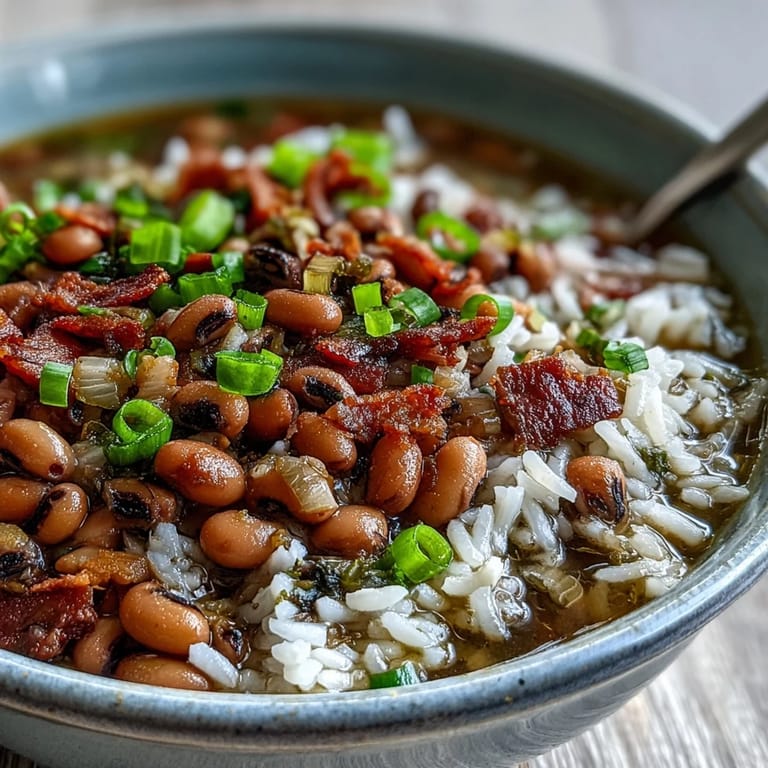
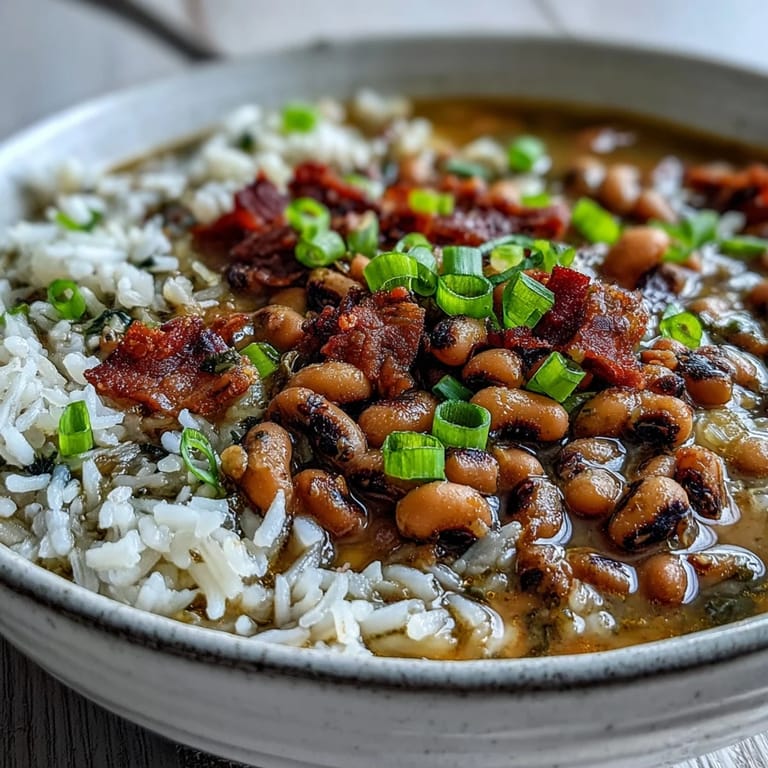
- Spoon that fluffy rice into bowls, ladle the peas and their broth over the top, then crown it with the reserved bacon and fresh scallions. Hot sauce on the side lets people add their own kick.
 Save
Save My favorite memory of this dish isn't from a fancy dinner—it's from a gray January afternoon when a neighbor came by unexpectedly, and I had a pot of Hoppin' John simmering on the stove. We sat at my kitchen table with bowls in front of us, and she told me stories about eating it as a kid in Charleston, and suddenly this wasn't just food anymore. It was a conversation, a connection, proof that some meals do carry luck.
The Luck Is in the Tradition
The New Year's Day timing matters more than you'd think—not because of any magic, but because sitting down with something warm and intentional on a day when everyone's making resolutions feels like a small act of kindness toward yourself. There's also something genuinely satisfying about eating something that's been connected to the same date and the same hope for a hundred years.
Variations That Still Honor the Original
You can absolutely make this vegetarian by swapping smoked paprika for the bacon flavor, though you lose some of that rendered fat richness—in that case, cook your aromatics in a little olive oil and add an extra pinch of salt. Some people add collard greens or diced tomatoes right at the end, letting them warm through without fully cooking, which brightens the whole dish and adds color. Cornbread on the side isn't optional in the South, and neither is coleslaw or pickled vegetables if you want to cut through the richness of the peas.
Making It Your Own
The skeleton of this recipe is pretty fixed—you need the peas, the rice, and something smoky—but everything else is flexible based on what you have on hand and what you like. Some kitchens add a pinch of smoked paprika even with bacon, others use vegetable broth instead of chicken because that's what's in their pantry, and I've never seen two family recipes that do the garnish exactly the same way.
- Leftover Hoppin' John reheats beautifully and actually tastes better the next day when all those flavors have time to know each other.
- You can make this a day ahead and just warm the peas gently before serving, then cook fresh rice to serve alongside.
- Freeze the peas and broth separately from the rice if you want to save portions, and they'll keep for a few months in the cold.
 Save
Save Make Hoppin' John because you want to eat something delicious, not because you're chasing luck—though there's something to be said for starting a year with something warm, intentional, and shared with the people around you. That's the real magic anyway.
Recipe FAQs
- → Why is Hoppin John traditionally eaten on New Year's Day?
Hoppin John is believed to bring good luck and prosperity in the new year. The black-eyed peas represent coins, while the collard greens often served alongside symbolize paper money. This Southern tradition has been passed down through generations as a way to start the year with hope and abundance.
- → Can I make Hoppin John vegetarian?
Absolutely. Simply omit the bacon and use smoked paprika or liquid smoke to add that essential smoky flavor. You can also start with a base of sautéed vegetables in olive oil. The dish remains delicious and satisfying while being completely plant-based.
- → Do I need to soak the black-eyed peas overnight?
Soaking dried black-eyed peas overnight helps them cook more evenly and reduces cooking time. However, if you're short on time, you can use canned black-eyed peas instead. Just rinse and drain them before adding to the pot, and reduce the simmering time to 20-25 minutes.
- → What should I serve with Hoppin John?
Hoppin John pairs beautifully with collard greens or mustard greens, cornbread, and hot sauce. For a complete Southern spread, consider adding fried okra, macaroni and cheese, or a fresh tomato salad. The dish is hearty enough to stand alone but shines as part of a larger traditional meal.
- → How long will leftovers keep in the refrigerator?
Leftovers store well in an airtight container in the refrigerator for 3-4 days. The flavors often improve after a day or two as the ingredients meld together. Reheat gently on the stovetop with a splash of broth or water to restore the creamy consistency.
- → Can I freeze Hoppin John?
Yes, Hoppin John freezes beautifully. Cool the dish completely before transferring to freezer-safe containers. It will keep for up to 3 months in the freezer. Thaw overnight in the refrigerator and reheat on the stovetop, adding a little liquid if needed. For best results, freeze the peas and rice separately.