 Save
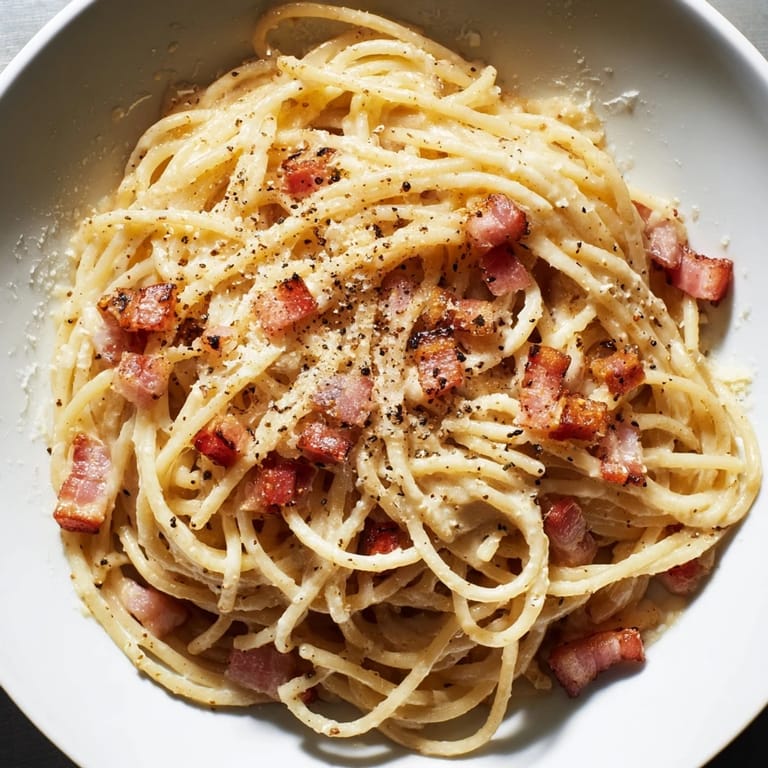
Save There's something almost magical about the first time you nail carbonara without thinking about it—when your hands just know the rhythm, and the eggs turn into liquid gold instead of scrambled bits. I stumbled into making this version one weeknight when I had exactly twenty minutes before someone was coming over, and no fancy ingredients, just what was already lurking in my fridge. That panic actually became the whole point: carbonara doesn't need hours or a long ingredient list, just timing, heat management, and a weird kind of trust in the process.
I made this for my neighbor one evening when she was stressed about cooking for her new partner, and watching her face when she tasted how creamy it was—without any cream in sight—made her laugh in this relieved way. That's when I realized carbonara isn't just dinner; it's a little kitchen magic trick that actually impresses people, and tastes even better when you're not overthinking it.
Ingredients
- Dried spaghetti: Two hundred grams is the sweet spot for two people—enough to feel substantial but thin enough to cook quickly and coat evenly with that creamy sauce.
- Large eggs: Room temperature if you can swing it, because they'll heat more gently and turn silky instead of chunky.
- Freshly grated Parmesan cheese: Not the stuff in the green shaker; real Parmigiano-Reggiano makes a difference you can taste, sharp and complex instead of dusty.
- Freshly ground black pepper: This isn't background seasoning—it's the backbone, so don't skimp or use pre-ground.
- Bacon or pancetta: A hundred grams gives you enough fat for flavor without drowning everything; if you use pancetta, it's a touch more authentic and slightly less smoky.
- Reserved pasta water: This starchy liquid is your insurance policy, turning everything silky and helping the sauce cling to each strand.
- Extra Parmesan and cracked black pepper for garnish: A final finish that reminds you why you're eating this in the first place.
Tired of Takeout? 🥡
Get 10 meals you can make faster than delivery arrives. Seriously.
One email. No spam. Unsubscribe anytime.
Instructions
- Get your water boiling and season it generously:
- Use a large pot and salt the water so it tastes like the sea—this is your only chance to season the pasta itself. Let it roll at a full boil before the spaghetti goes in.
- Cook the pasta until just al dente:
- Follow the package timing but taste a minute before it says you should; you want it to have a tiny bit of resistance in the center, because it'll continue cooking in the hot skillet. Before you drain it, grab a measuring cup or small bowl and scoop out about a third of a cup of that starchy water—this is liquid gold.
- Whisk your egg mixture while the pasta cooks:
- In a separate bowl, crack both eggs and add the grated Parmesan and black pepper, then whisk until everything is combined and smooth. Don't walk away from this step; it takes one minute and makes all the difference later.
- Crisp the bacon until it's golden and shattered:
- Dice it into small pieces so it cooks evenly, and cook it in your large skillet over medium heat until the edges are dark and crispy and the fat has rendered, about three to four minutes. This is the flavor foundation, so don't rush it.
- The crucial moment—combine everything off the heat:
- Drain your pasta and add it straight to the skillet with the bacon (make sure the skillet is off the heat first). Pour in that egg mixture all at once and immediately start tossing with tongs or a pasta fork, lifting and turning constantly. As you toss, add the reserved pasta water a little at a time, watching how the sauce transforms from a scrambled mess into something silky and coating—this usually takes about thirty seconds of vigorous tossing.
- Serve the moment it's ready:
- Divide between two bowls and top with extra grated Parmesan and a generous crack of black pepper. Eat it immediately, while it's hot and the texture is still perfect.
 Save
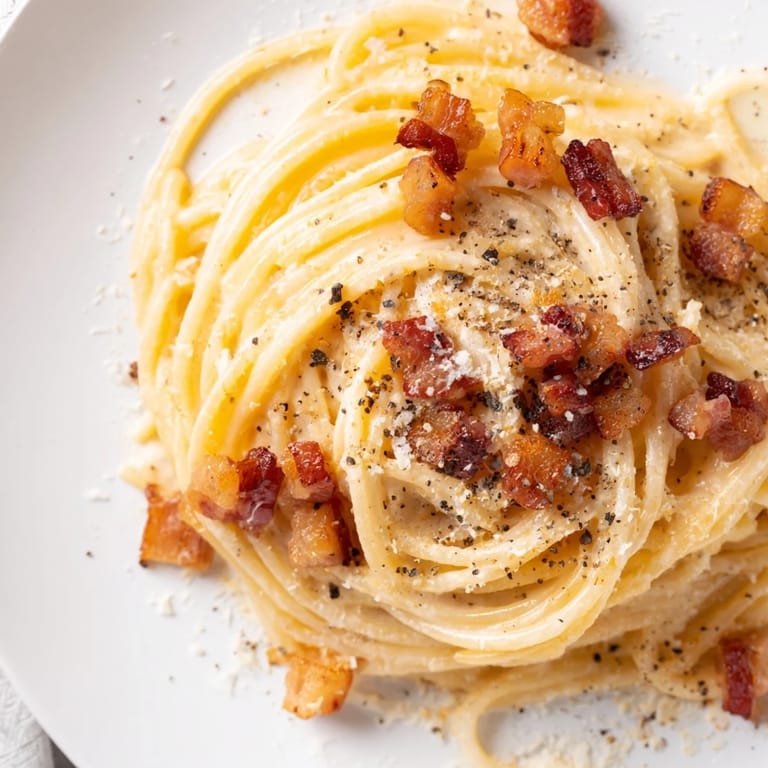
Save I learned the scrambling lesson the hard way my first time, and I've never forgotten the exact moment of panic when I realized the eggs were going grainy. Now I always pause and take a breath before pouring them in, reminding myself that this dish rewards patience and sequence more than speed.
The Real Secret to Silky Sauce
The magic isn't hidden in some obscure technique—it's in understanding that you're essentially making a warm emulsion, like a gentle mayonnaise. The starchy pasta water acts as an emulsifier, helping the fat from the bacon and the richness of the eggs and cheese bind together into something smooth and coating rather than separated and greasy. The moment you understand that, you stop being afraid of the eggs and start trusting the process. I used to think there was some complicated trick, but really it's just knowing that off-the-heat, constant movement, and gradual addition of pasta water solve almost every problem.
Variations That Actually Work
The beauty of carbonara is that it's simple enough to be flexible without becoming something else entirely. A whole clove of garlic minced into the bacon while it cooks, then fished out before the pasta goes in, adds a whisper of flavor that some people swear by. Pecorino Romano instead of Parmesan gives you a sharper, more traditionally Roman taste, and honestly, if you can get good Pecorino, it's worth trying both and deciding which version speaks to you. Even the choice between bacon and pancetta changes the whole personality of the dish—bacon is smoky and bold, while pancetta is more delicate and pork-forward.
Timing and Temperature Matter More Than You'd Think
The entire dish happens in about thirty seconds once everything is in the skillet, which means you need everything prepped and ready before you start combining. Having your ingredients measured, your pasta water reserved, and your skillet off the heat before anything comes together is the difference between smooth sauce and scrambled eggs, between dinner and regret. I've also learned that the season matters—in winter, when kitchens are cooler, the eggs are a tiny bit more forgiving; in summer, with residual heat everywhere, you need to be even more vigilant about that off-the-heat rule.
- Room temperature eggs are your friend because they heat more gently and evenly when tossed with hot pasta.
- The entire tossing and sauce-making process should take no more than thirty to forty-five seconds.
- If your sauce looks too thin, add more pasta water a splash at a time; if it looks too thick, add more heat gradually by tossing longer, but never put the skillet back on the burner.
 Save
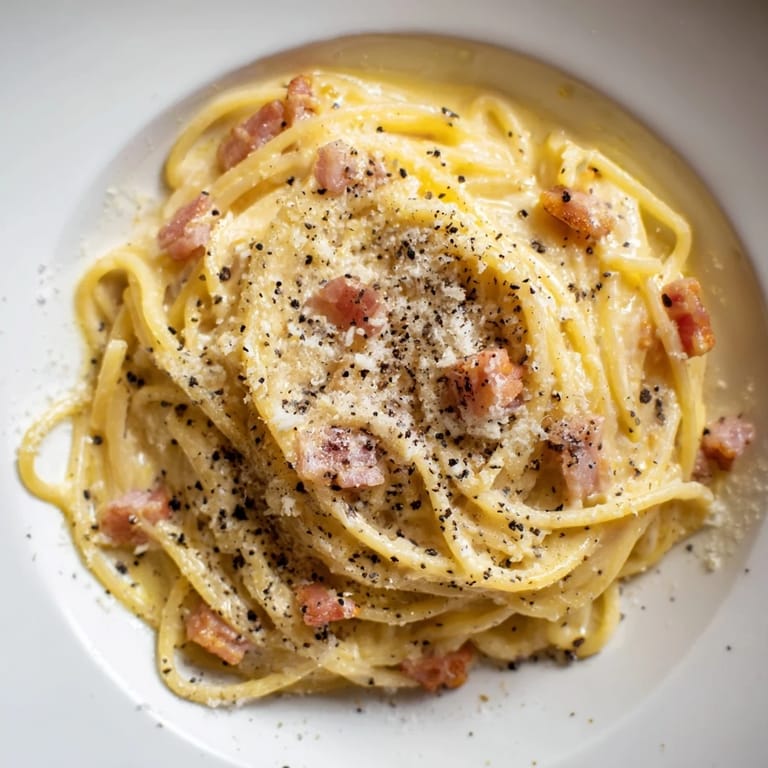
Save This dish taught me that cooking doesn't always require time or complicated steps—sometimes it just requires understanding how a few simple things work together, and then trusting that understanding. That's the whole point.