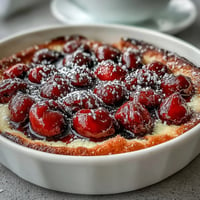
 Save
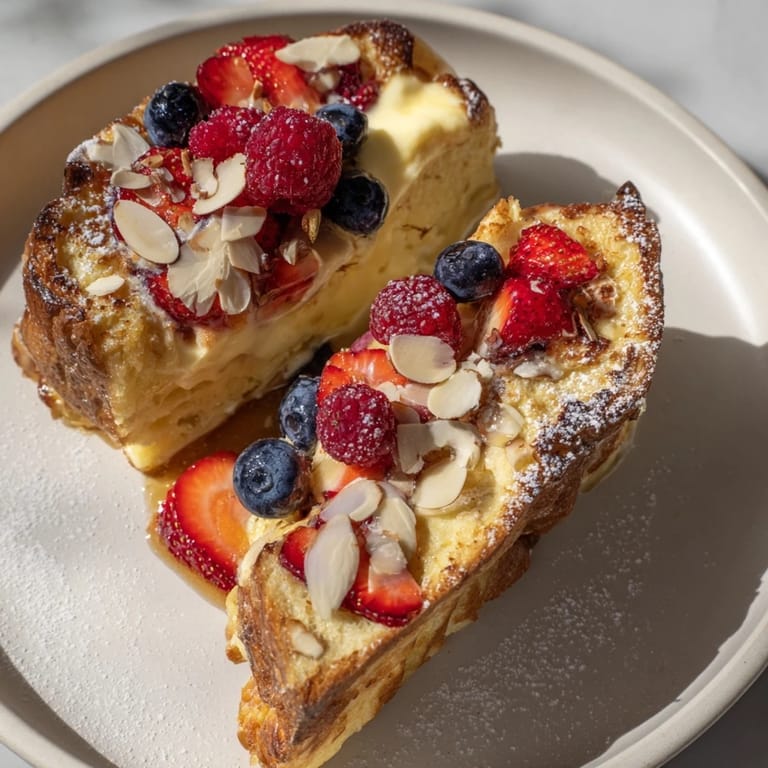
Save There's something wonderfully lazy about custard toast—the kind of breakfast that feels indulgent without requiring much effort or skill. I discovered it on a morning when I had brioche going slightly stale on the counter and a carton of Greek yogurt that needed using up, and I started wondering what would happen if I treated thick bread like a shallow vessel for something creamy and sweet. Twenty minutes later, golden-edged slices emerged from the oven with centers that jiggled just slightly, and I realized I'd stumbled onto something that tastes like brunch but cooks faster than scrambled eggs.
My roommate walked into the kitchen as the second batch was cooling and asked what smelled so good—the honey and vanilla had filled the whole apartment. I slid a warm slice onto a plate, scattered some raspberries across it, and watched her take a bite without saying anything for a moment. She just nodded and asked if I could make it again tomorrow, which, I've learned, is the highest compliment anyone can give a breakfast dish.
Ingredients
- Brioche or challah bread: These rich, pillowy breads soak up the custard without falling apart, unlike regular sandwich bread which tends to get soggy or crack when pressed.
- Large egg: The backbone of the custard; it sets just enough to hold everything together while staying creamy in the center.
- Plain Greek yogurt: Thicker and tangier than regular yogurt, it adds body to the custard and keeps it from being cloyingly sweet or too eggy.
- Honey or maple syrup: Both work beautifully; honey adds floral notes while maple brings earthiness—choose based on your mood that morning.
- Vanilla extract: A small amount transforms the custard from plain to cozily aromatic; don't skip it.
- Salt: A pinch isn't optional; it brightens everything and balances the sweetness.
- Fresh berries and nuts: These are truly optional but they add both visual appeal and textural contrast that makes the dish feel complete.
Tired of Takeout? 🥡
Get 10 meals you can make faster than delivery arrives. Seriously.
One email. No spam. Unsubscribe anytime.
Instructions
- Heat your oven and prep the pan:
- Start by preheating to 375°F and lining a baking sheet with parchment paper, which keeps cleanup effortless and prevents sticking.
- Build the custard:
- Whisk together the egg, Greek yogurt, honey, vanilla, and salt until completely smooth—no lumps or streaks. This is where a proper whisk makes a real difference; a fork will take longer and leave bits of egg undissolved.
- Prepare the bread vessel:
- Place your bread slices on the prepared sheet and gently press the back of a spoon into the center of each slice to create a shallow well, being careful to leave a border so the bread can hold the custard without spilling over.
- Fill with custard:
- Spoon or pour the custard mixture into each well, dividing it evenly. Don't overfill; the custard will puff slightly as it bakes.
- Add toppings (if using):
- Scatter berries and nuts over the custard now, before it sets, so they bake in slightly and become part of the whole.
- Bake until set:
- Bake for 12 to 15 minutes, watching for the custard to just set around the edges while still jiggling slightly in the very center, and for the bread to turn golden brown. The residual heat will finish cooking the custard after it comes out.
- Finish and serve:
- Let cool for a minute, then dust with powdered sugar and drizzle with extra honey or maple syrup. Serve while still warm, when the contrast between the crisp edges and soft center is most pronounced.
 Save
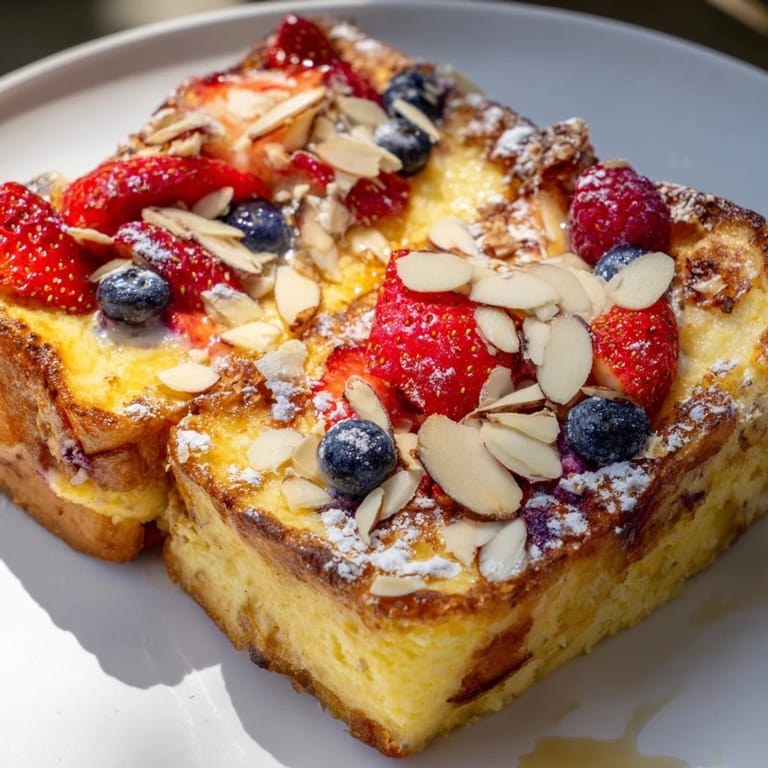
Save The best part of this breakfast isn't the taste alone—it's that moment when you slice into the warm custard and it releases a little plume of steam, or when the honey drips down the sides and pools on the plate. Those small, sensory details are what make eating matter, not just fueling yourself but actually pausing to notice what you're doing.
Flavor Variations Worth Trying
The custard itself is a blank canvas. A pinch of cinnamon warms the whole thing toward fall mornings, while a little lemon zest added to the egg mixture brings brightness and cuts through the sweetness beautifully. I've also stirred in a tiny bit of cardamom once, inspired by a café breakfast in Copenhagen, and it shifted the dish into something almost Middle Eastern. Each addition is subtle but noticeable, so add gradually and taste as you go.
Making It Work for Your Dietary Needs
This recipe adapts gracefully to different eating styles. Gluten-free bread works perfectly in place of brioche—I've used quality GF sourdough with excellent results. For a dairy-free version, swap the Greek yogurt for coconut yogurt or cashew cream and use a flax egg instead of a regular one. The structure stays the same; only the custard's texture shifts slightly, becoming either richer or lighter depending on your substitute.
Serving and Make-Ahead Strategies
Custard toast is best eaten immediately while the bread is still crisp on the edges and the center is warm, but the assembled unbaked versions can sit in the fridge for a few hours before baking if your morning is hectic. Just add a few extra minutes to the bake time if baking from cold. A dollop of whipped cream or extra Greek yogurt alongside turns a simple breakfast into something approaching dessert, which isn't necessarily a bad thing on a weekend.
- The bread must be thick (at least 1 inch) to hold the custard without disintegrating.
- Don't use water-logged berries; pat them dry first so they don't make the custard soggy.
- Leftovers can be gently reheated in a low oven, though texture suffers—better to make fresh each time.
 Save
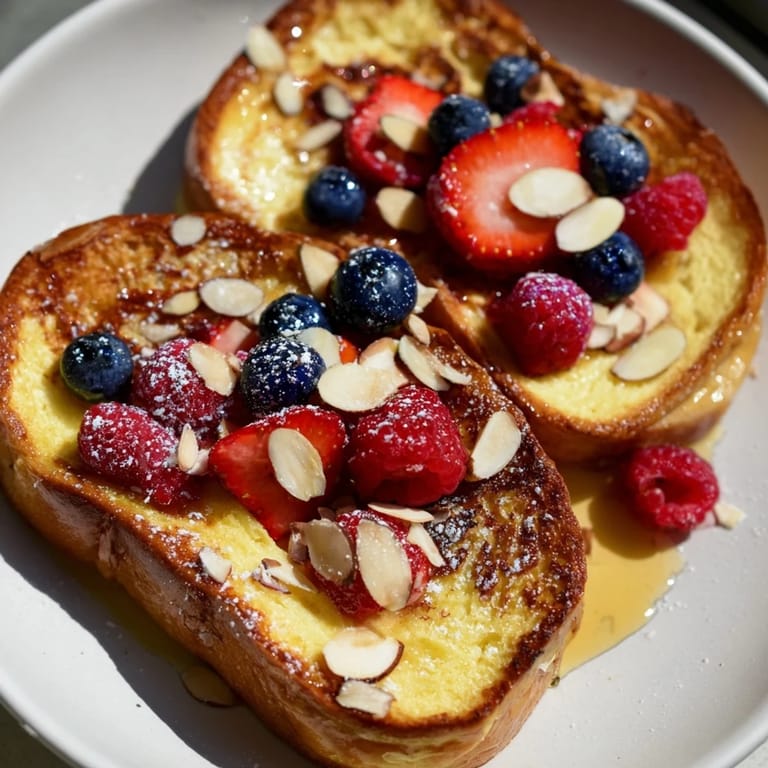
Save Custard toast taught me that the simplest breakfasts—the ones that take barely longer than toast and coffee—are often the ones that linger longest in memory. Make it for someone you love and watch their face when they taste it.
Recipe FAQs
- → What type of bread works best for custard toast?
Thick slices of brioche or challah are ideal due to their sturdy texture and slight sweetness, which absorb the custard well without becoming soggy.
- → Can I substitute Greek yogurt in the custard?
Yes, you can use dairy-free yogurt alternatives to accommodate dietary preferences or restrictions while maintaining creaminess.
- → How do I achieve a crisp exterior on the custard toast?
Baking at 375°F (190°C) until the edges turn golden ensures a crisp outer layer while keeping the center soft and custardy.
- → What toppings enhance the flavor of custard toast?
Fresh berries, sliced almonds or pistachios, powdered sugar, and an extra drizzle of honey or maple syrup add complementary textures and sweetness.
- → Are there any suggested flavor additions to the custard mix?
Adding a pinch of cinnamon or lemon zest can elevate the custard with warm or bright notes, enhancing overall flavor complexity.