 Save
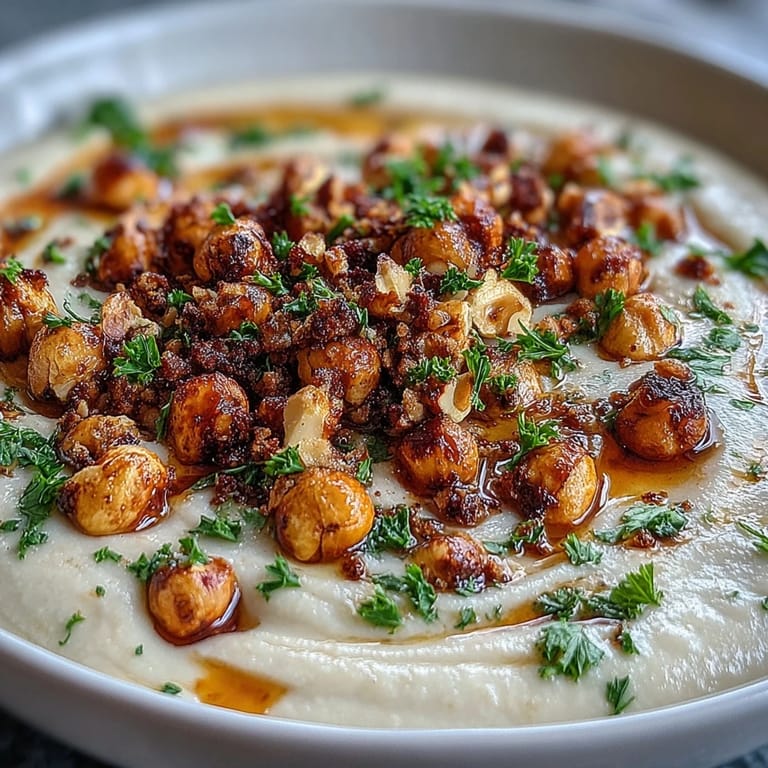
Save There's something about celeriac that catches people off guard—this knobby, pale root vegetable that looks like it belongs in a medieval garden rather than a modern kitchen. I discovered this soup entirely by accident when a farmers market vendor handed me a celeriac the size of a grapefruit and insisted it would change my approach to winter cooking. Skeptical but curious, I roasted it until the edges turned golden, and the kitchen filled with this nutty, almost sweet aroma that made me pause mid-chopping. What emerged from the blender was so velvety and refined that I couldn't believe it started with something so humble. The hazelnut crumble on top felt like the final flourish—the moment the dish became something I'd make again and again.
I made this for a dinner party where one guest mentioned they'd never had celeriac before, and their skepticism was written all over their face when I mentioned what the soup was made from. By the third spoonful, they were actually quiet, which for this particular friend was the highest compliment. Later, they admitted it reminded them of restaurant food—that kind of elegant, understated dish that feels more refined than its ingredient list suggests. That's when I realized celeriac soup does something rare: it makes people feel like they're eating something special, even when you're serving it from your own kitchen in casual bowls.
Ingredients
- Celeriac (700 g, peeled and cubed): This is your star ingredient—its earthy, slightly celery-like flavor becomes creamy and sophisticated when roasted and blended.
- Onion (1 medium, chopped): The aromatic foundation that builds flavor in the background without overpowering the delicate celeriac.
- Garlic (2 cloves, minced): Keep it subtle; you're adding depth, not garlic soup.
- Potato (150 g, peeled and diced): This adds body and helps create that silky texture you're after without needing cream if you'd rather skip it.
- Vegetable broth (900 ml): Use good quality broth here—it's one of the few ingredients you taste directly, so watery broth will show.
- Olive oil (2 tbsp total): Divided between roasting and sautéing, it brings out the natural sweetness in everything.
- Heavy cream or plant-based alternative (100 ml): Optional but worth including; it rounds out the earthiness without masking the celeriac flavor.
- White pepper (1/2 tsp): Warmer and less harsh than black pepper against the delicate soup.
- Salt: Season in layers, tasting as you go.
- Hazelnuts (70 g, roughly chopped): The texture and nutty richness that makes this soup memorable—toast them yourself rather than buying pre-roasted for maximum flavor.
- Unsalted butter or plant-based margarine (1 tbsp): Coats the hazelnuts in golden richness.
- Sea salt for crumble (1/4 tsp): A tiny pinch that makes the nuttiness pop.
- Fresh parsley (1 tbsp, finely chopped): A whisper of brightness and color—don't skip it even though it's optional.
Tired of Takeout? 🥡
Get 10 meals you can make faster than delivery arrives. Seriously.
One email. No spam. Unsubscribe anytime.
Instructions
- Get your oven warming:
- Preheat to 200°C (390°F) and let it come to full temperature while you prep—this makes a real difference in how quickly the celeriac caramelizes.
- Prepare and roast the celeriac:
- Peel your celeriac (don't be intimidated by its rough exterior), cube it roughly, and toss with 1 tablespoon of olive oil plus a pinch of salt and white pepper. Spread on a baking tray in a single layer and roast for 25–30 minutes, stirring halfway through, until the edges are golden and the pieces are completely tender when you pierce them with a fork. This is where the magic happens—the roasting brings out a sweetness that boiling never could.
- Build your base while it roasts:
- While the celeriac is in the oven, heat the remaining tablespoon of olive oil in a large pot over medium heat. Add your chopped onion and let it soften for about 4 minutes until it turns translucent and smells sweet, then add the minced garlic and diced potato and cook for another 2 minutes until fragrant. You're not looking for color here—just a gentle foundation of flavor.
- Bring it together in the pot:
- Once the roasted celeriac is golden and soft, transfer it to the pot with the aromatics. Pour in your vegetable broth and bring to a gentle boil, then reduce the heat and simmer for 15–20 minutes until all the vegetables are very soft and the flavors have mingled. The kitchen will smell incredible at this point.
- Toast your hazelnuts for the crumble:
- While the soup simmers, pour your roughly chopped hazelnuts into a dry skillet over medium heat and toast them for 3–4 minutes, stirring occasionally, until they're golden and smell deeply nutty. Add the butter and sea salt, stirring constantly until the nuts are evenly coated and gleaming, then remove from heat and let them cool slightly so they crisp up a bit.
- Blend until silky:
- Using an immersion blender, purée the soup directly in the pot until it's completely smooth and velvety—this takes about 2–3 minutes of steady blending. If you're using a countertop blender, work in batches and be careful with the heat. Stir in your cream (if using) and taste for seasoning, adjusting salt and white pepper to your preference.
- Plate and crown:
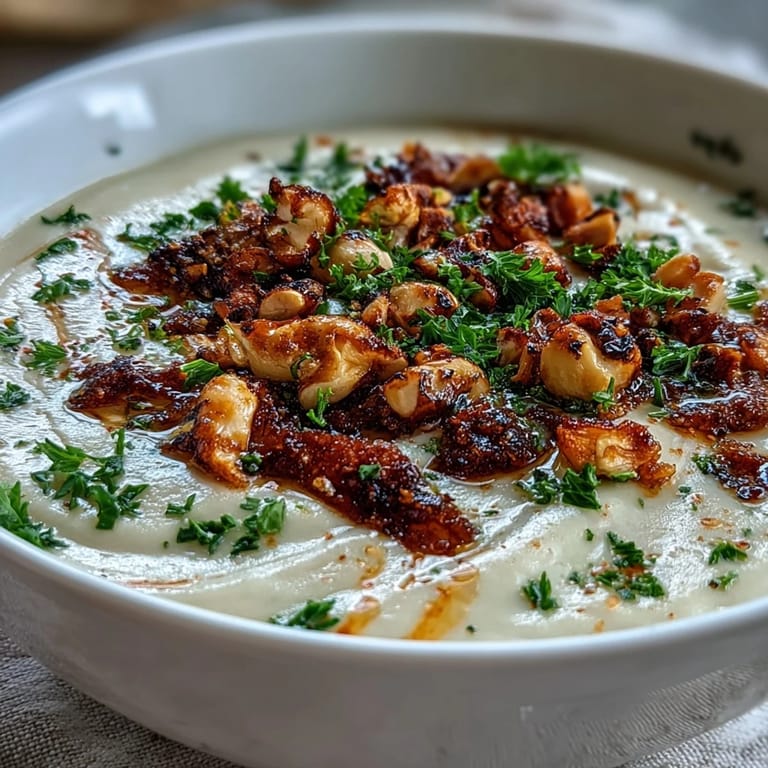
- Ladle the soup into warm bowls and top each one generously with the hazelnut crumble and a small scatter of fresh parsley for color and freshness. Serve immediately while the soup is hot and the hazelnuts are still slightly warm.
 Save
Save There's a moment in soup-making that feels almost meditative—that time when everything is simmering, the house smells like home, and you can just stand there and breathe it in before the work of blending begins. This soup gave me one of those moments, and I found myself thinking about how something so simple could feel so complete. That's when I understood why people would ask me to make it again.
Why Roasting Changes Everything
The difference between roasted and boiled celeriac is almost shocking once you taste it side by side. Roasting concentrates the natural sugars and coaxes out a subtle nuttiness that boiling simply cannot achieve—the high heat causes a light caramelization on the edges that adds depth and complexity to the finished soup. I learned this the hard way by making the soup both ways in the same week, and the roasted version was so superior that I've never looked back. It's one of those cooking lessons that sticks with you: sometimes the extra twenty minutes in the oven is absolutely worth it.
Playing with the Crumble
What I love about the hazelnut crumble is how forgiving it is—it's not a delicate technique, just hazelnuts toasting in a skillet until they smell incredible, then a knob of butter and a pinch of salt to tie it all together. You could easily swap in other nuts if hazelnuts aren't your thing; walnuts would be earthier, almonds lighter and more delicate, pecans richer and sweeter. The main thing is to toast whatever you choose until you can really smell it—that's your signal that the oils have woken up and the flavor will be pronounced.
Making It Your Own
This soup is a wonderful canvas for small adjustments based on what you have and what you're craving. If you want a whisper of brightness, a squeeze of fresh lemon juice stirred in just before serving lifts everything beautifully, or a small pinch of fresh thyme can add an herbal note that feels almost elegant. Some people love a tiny shred of nutmeg—just the faintest amount—which echoes the soup's naturally warm, earthy character. The beauty of celeriac is that it's not precious; it plays well with others and rewards experimentation.
- A drizzle of truffle oil on top turns this into something restaurant-special for dinner parties.
- If you want to add greens, a handful of spinach wilted into the pot at the end adds nutrition without changing the flavor much.
- Leftover soup freezes beautifully for up to three months—just freeze it before adding cream, and add that when you reheat.
 Save
Save This soup has become one of those recipes I return to when I want to cook something that feels special but doesn't demand a lot of fussing. It's proof that the most elegant dishes are often the simplest ones, built on good ingredients and a little patience.
Recipe FAQs
- → Can I make this soup ahead of time?
Absolutely. The base soup keeps beautifully in the refrigerator for up to 3 days. Store the hazelnut crumble separately in an airtight container to maintain its crisp texture. Reheat gently on the stovetop, adding a splash of broth or cream if needed to adjust consistency.
- → What can I substitute for celeriac?
Parsnips or cauliflower make excellent alternatives, offering similar earthy notes and creamy textures when blended. Keep in mind that cooking times may vary slightly depending on the vegetable you choose.
- → Is this suitable for freezing?
Yes, the soup freezes well for up to 2 months. Cool completely before transferring to freezer-safe containers. Thaw overnight in the refrigerator and reheat gently. Prepare fresh hazelnut crumble when serving for the best texture.
- → How do I achieve the smoothest texture?
Roasting the celeriac until completely soft is key. Blend thoroughly with an immersion blender for 2-3 minutes, or use a countertop blender in batches. For extra refinement, pass through a fine-mesh sieve before adding cream.
- → Can I use other nuts for the crumble?
Walnuts or pecans work wonderfully as alternatives, bringing their own distinct flavor profiles. Toast them the same way and adjust cooking time by 1-2 minutes depending on size and oil content.