 Save
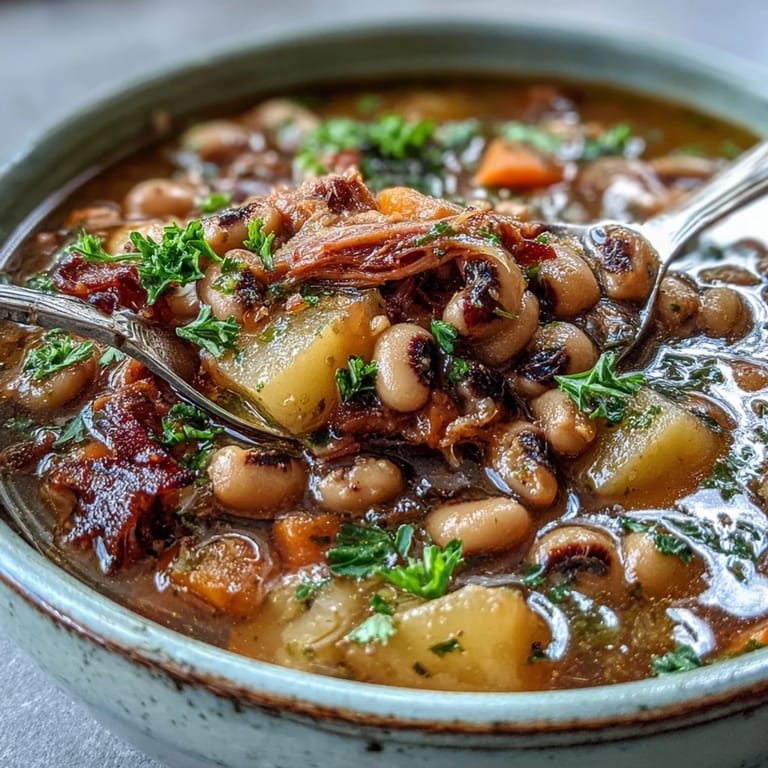
Save My grandmother used to make this stew on the first cold snap of the year, and the smell would pull everyone into the kitchen before we even sat down to eat. There's something about black-eyed peas and smoked ham that feels like pure comfort, like the dish knows exactly what you need when the weather turns gray. I've made it dozens of times since then, and it never fails to warm the house and the people in it.
I served this to my sister's book club one winter evening, and they kept asking for seconds even after the main course was done. Someone asked if it was a restaurant recipe, and I loved admitting it was just patience and good ingredients working together. That night taught me that food like this bridges the gap between impressive and unpretentious.
Ingredients
- Smoked ham hocks: About 1.5 lbs total—these are the backbone of the whole stew, releasing deep, savory flavor into the broth as they simmer.
- Dried black-eyed peas: 2 cups soaked overnight, or 4 cups canned if you're in a hurry—soaking the dried ones gives you more control over texture.
- Onion: 1 large one, diced—the sweet base that everything else builds on.
- Carrots: 2 medium ones, peeled and diced—they soften beautifully and add natural sweetness.
- Celery: 2 stalks, diced—this completes the holy trinity that makes Southern cooking taste like home.
- Potatoes: 2 medium ones in 1-inch cubes—they thicken the stew slightly as they break down.
- Diced tomatoes: One 14.5 oz can with juice—the acidity balances the richness of the meat.
- Garlic: 3 cloves, minced—just enough to add depth without overpowering the other flavors.
- Chicken or vegetable broth: 6 cups—low-sodium lets you control the salt and taste the meat.
- Bay leaves: 2 of them—they quietly deepen everything without announcing themselves.
- Dried thyme: 1 teaspoon—an earthy note that ties the whole dish together.
- Smoked paprika: 1/2 teaspoon—this is where you get that warm, smoky undertone.
- Black pepper: 1/2 teaspoon freshly ground—always fresher than pre-ground.
- Cayenne pepper: 1/4 teaspoon optional—add it if you want a subtle heat that builds as you eat.
- Salt: To taste at the end—the ham hocks add saltiness, so wait to season until near the finish.
- Fresh parsley: 2 tablespoons chopped for garnish—bright and fresh against the deep, earthy stew.
- Hot sauce: For serving—let people adjust the heat themselves.
Tired of Takeout? 🥡
Get 10 meals you can make faster than delivery arrives. Seriously.
One email. No spam. Unsubscribe anytime.
Instructions
- Soak the peas overnight:
- If you're using dried black-eyed peas, cover them generously with water and let them sit on the counter or in the fridge overnight. This softens them and cuts down on cooking time—drain and rinse them well before you start.
- Build your flavor base:
- Heat a splash of oil in a large Dutch oven over medium heat, then add the diced onion, carrots, and celery. Let them soften for about 5 minutes, stirring now and then until the edges start to caramelize slightly.
- Add the garlic:
- Stir in the minced garlic and let it cook for just a minute until the whole pot smells incredible and you can almost taste it.
- Combine everything:
- Add the ham hocks, drained peas, potatoes, canned tomatoes with their juice, broth, bay leaves, thyme, smoked paprika, black pepper, and cayenne if you're using it. Bring it all to a boil, watching as the broth turns rich and golden.
- Simmer low and slow:
- Once it reaches a boil, lower the heat to low, cover the pot, and let it bubble gently for about 2 hours. Stir it occasionally and resist the urge to peek too often—patience is your friend here.
- Shred and return the meat:
- After 2 hours, the ham hocks should be so tender that the meat falls right off the bone. Remove them, shred the meat into bite-sized pieces, discard the skin and bone, and stir the meat back into the stew.
- Finish and adjust:
- Taste the stew carefully and add salt as needed—the ham already brings saltiness, so go easy. If you want it thicker, simmer uncovered for another 10-15 minutes.
- Serve with love:
- Remove the bay leaves, ladle the stew into bowls, garnish with fresh parsley, and set out hot sauce for anyone who wants an extra kick.
 Save
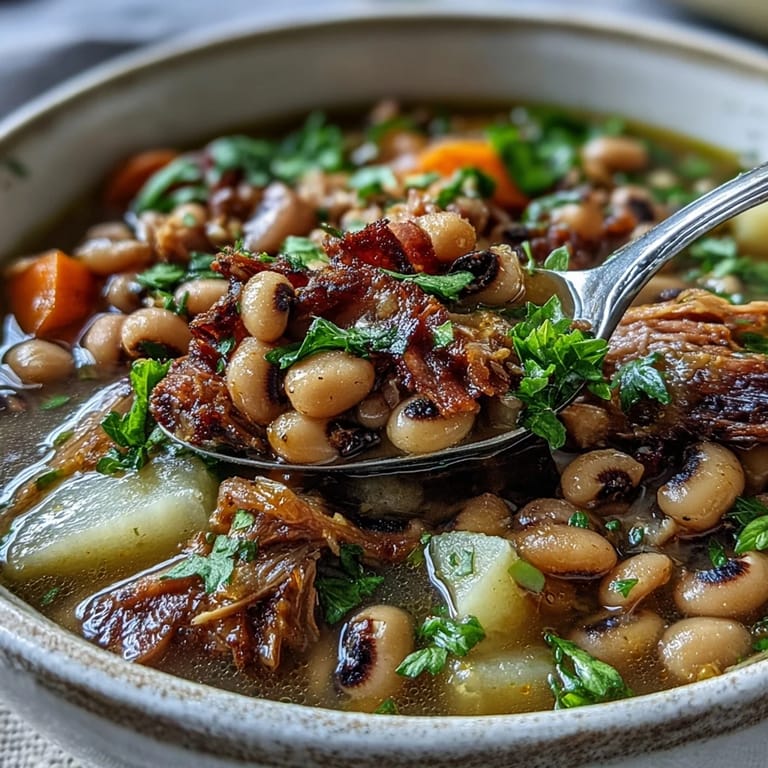
Save My neighbor stopped by during the last hour of cooking and ended up staying for dinner without planning to—that's the power of a stew like this. Sometimes the best moments happen not because you're trying to impress, but because you're just making something honest and good.
Why This Stew Works Every Time
The magic is in letting time do the work for you. The longer everything simmers together, the more the flavors knit themselves into something greater than the sum of their parts. You're not managing a complicated technique here—you're just giving quality ingredients room to become something wonderful.
Making It Your Own
This stew is forgiving and adaptable without losing its soul. Some people add a splash of apple cider vinegar near the end for brightness, others throw in okra or collard greens in the last 30 minutes. For a vegetarian version, skip the ham hocks and add a teaspoon of liquid smoke and an extra half-teaspoon of smoked paprika to keep that depth.
Storage and Serving Ideas
Leftovers actually improve after a day or two in the fridge as the flavors continue to meld—it keeps well for up to 3 days sealed in a container. Serve it over steamed rice, alongside cornbread, or even ladle it over mashed potatoes if you're feeling indulgent.
- A dollop of sour cream stirred in just before eating adds unexpected creaminess.
- Cornbread on the side isn't just tradition—it's the perfect tool for soaking up the broth.
- Make a double batch and freeze half for a night when you need comfort but not the work.
 Save
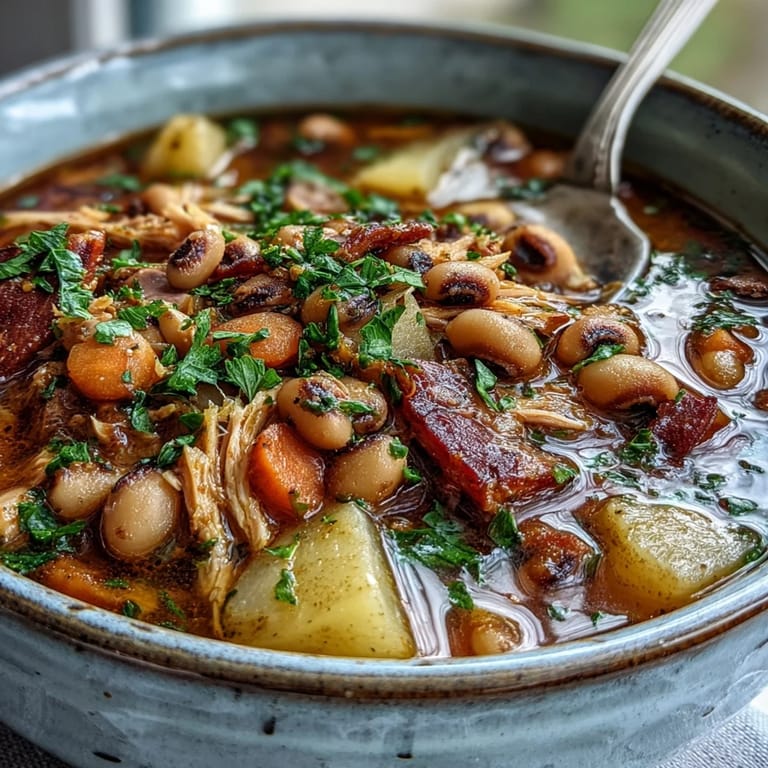
Save This stew is the kind of cooking that reminds you why you step into the kitchen in the first place. Make it for people you care about, and watch it become part of your story together.
Recipe FAQs
- → Do I need to soak dried black-eyed peas overnight?
Yes, soaking dried black-eyed peas overnight helps them cook evenly and become tender. If you're short on time, you can use canned peas instead—just rinse and drain them before adding to the pot.
- → Can I make this vegetarian?
Absolutely. Simply omit the ham hocks and use additional smoked paprika or a few drops of liquid smoke to maintain that smoky depth. Vegetable broth works perfectly in place of chicken broth.
- → What's the best way to serve this stew?
This pairs beautifully with cornbread or steamed rice. The starch helps soak up the flavorful broth. A bottle of hot sauce on the side lets everyone adjust the heat to their preference.
- → How long do leftovers keep?
Leftovers actually improve in flavor as the ingredients continue to meld. Store in an airtight container in the refrigerator for up to 3 days. Reheat gently on the stovetet, adding a splash of broth if needed.
- → Can I freeze this stew?
Yes, this freezes well for up to 3 months. Cool completely before transferring to freezer-safe containers. Thaw overnight in the refrigerator and reheat on the stovetop.
- → Why remove the ham hocks before shredding?
Removing the ham hocks makes it easier to separate the meat from skin, bone, and excess fat. Returning just the tender shredded meat back into the stew ensures every bite is flavorful without any gristly pieces.